
A Guide to Qatari Cuisine
The dishes actually worth ordering, what they taste like, and where the flavors come from.
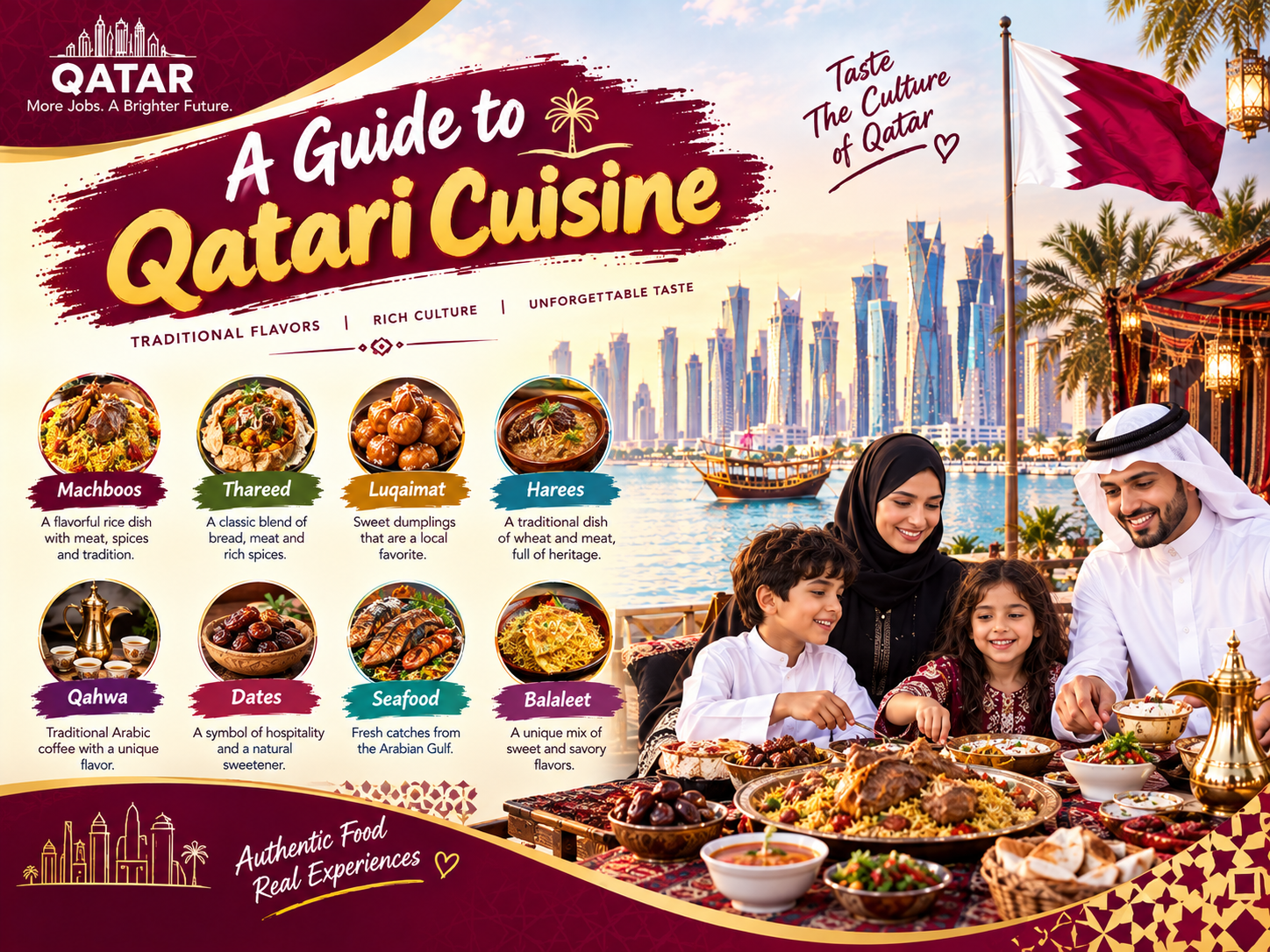
Qatari food does not get the international attention that some neighboring cuisines do, which is genuinely a shame, because the flavors are distinct: warm spices like cumin, coriander, cinnamon, and saffron built on a base of rice, meat, and fish shaped by centuries of Gulf trade routes. Here is what to actually order.
Machbous, the national dish
Also spelled majboos, this is spiced rice served with meat, usually chicken or lamb, and it is the dish most likely to appear at a Qatari family table on any given day. It shows up everywhere from home kitchens to traditional restaurants, and if you only try one Qatari dish, this is the one.
Harees, for something heartier
Pounded wheat cooked slowly with meat, olive oil, and cinnamon until it reaches a thick, almost porridge-like texture. It is especially popular during Ramadan and celebrations, and it is a good pick if you want something warming and different from rice-based dishes.
Al Thareed, the comfort food option
Crispy flatbread layered with a soup made from lamb, chicken, or vegetables. It is closer to a stew you eat with bread than a soup you drink, and it is one of the more approachable dishes for a first-time try of Qatari food.
Luqaimat, the dessert to end on
Small fried dough balls drizzled with date syrup or honey, crisp outside and soft inside. This is the quintessential Qatari dessert, and it shows up at nearly every celebration and most dessert menus in Souq Waqif.
Dates and Arabic coffee: the hospitality ritual
Gahwa, or Arabic coffee, served alongside dates is central to Qatari hospitality. If you are hosted in a Qatari home, accepting this offer graciously is genuinely part of the etiquette, not just a nice gesture, and it is worth reading our guide to dining etiquette in Qatar before any formal meal invitation.
Where to actually try this
Souq Waqif remains the single best concentration of traditional Qatari restaurants in one walkable area, alongside a genuinely wide range of international dining. Our guide to the best places to visit in Doha covers what else to pair a food-focused visit with. This is a general cultural guide to dishes, not a restaurant directory. We did not verify current restaurants, menus, or opening hours, so check before you go.
Real problems people run into
- I don't know what to order and don't want to just get a generic mixed grill. Start with machbous. It is the most representative single dish, and most traditional restaurants do a solid version of it.
- I'm invited to a Qatari home and don't know what to expect food-wise. Expect communal dishes, dates and coffee offered early, and a genuine expectation that you try a bit of everything. Our dining etiquette guide covers the specifics so you are not caught off guard.
- Everything at restaurants looks international, not local. Souq Waqif specifically leans traditional. Many hotel restaurants and mall food courts lean international by design, so if you want authentic Qatari food, head there first.
More dishes worth knowing
Beyond the classics above, a few dishes come up often in Qatari homes. Madrouba is a thick, savory rice dish cooked until soft and creamy, commonly made with chicken and spices, and it suits anyone who wants something mild and filling. Balaleet is sweetened vermicelli flavored with cardamom and saffron, commonly topped with a thin omelet, and it is a classic breakfast, so expect sweet and savory together.
What to drink
Gahwa, Arabic coffee, is lightly roasted and flavored with cardamom, served in small cups. It is usually offered with dates. If you have had enough, it is common to give the cup a gentle shake when handing it back. Karak, strong spiced milk tea, is the everyday drink you will find across the country.
Food during Ramadan
Ramadan changes how people eat. Iftar, the meal that breaks the fast at sunset, is when dishes like harees and thareed appear most, along with sweets like luqaimat. Many restaurants adjust their opening hours, so check before you go, and remember that eating or drinking in public during fasting hours is discouraged.
Ordering tips
This is our own practical advice, not an official guide.
- Ask what is in sauces and soups if you have allergies or dietary needs, because many traditional dishes center on meat and rice.
- Order a few dishes to share rather than one each, since sharing is how Qatari meals are usually served.
- Ask which dishes are made fresh that day, particularly at traditional restaurants.
If you are planning a food budget, see our cost of living guide for how eating out compares with cooking at home.
What we could not verify
- Current restaurants, menus, or opening hours, since this is a guide to dishes and not a directory.
- Regional variations of each dish, which differ from family to family.
Frequently asked questions
What is the national dish of Qatar?
Machbous, also called majboos, a spiced rice dish typically served with chicken or lamb.
Where can I try traditional Qatari food in Doha?
Souq Waqif has the strongest concentration of traditional Qatari restaurants in one walkable area.
What is the traditional Qatari dessert?
Luqaimat, small fried dough balls drizzled with date syrup or honey, crisp outside and soft inside.

Agha Ali Abbas
Founder & Editor
More on Food
Explore everything you need to know about qatar food.
Related articles
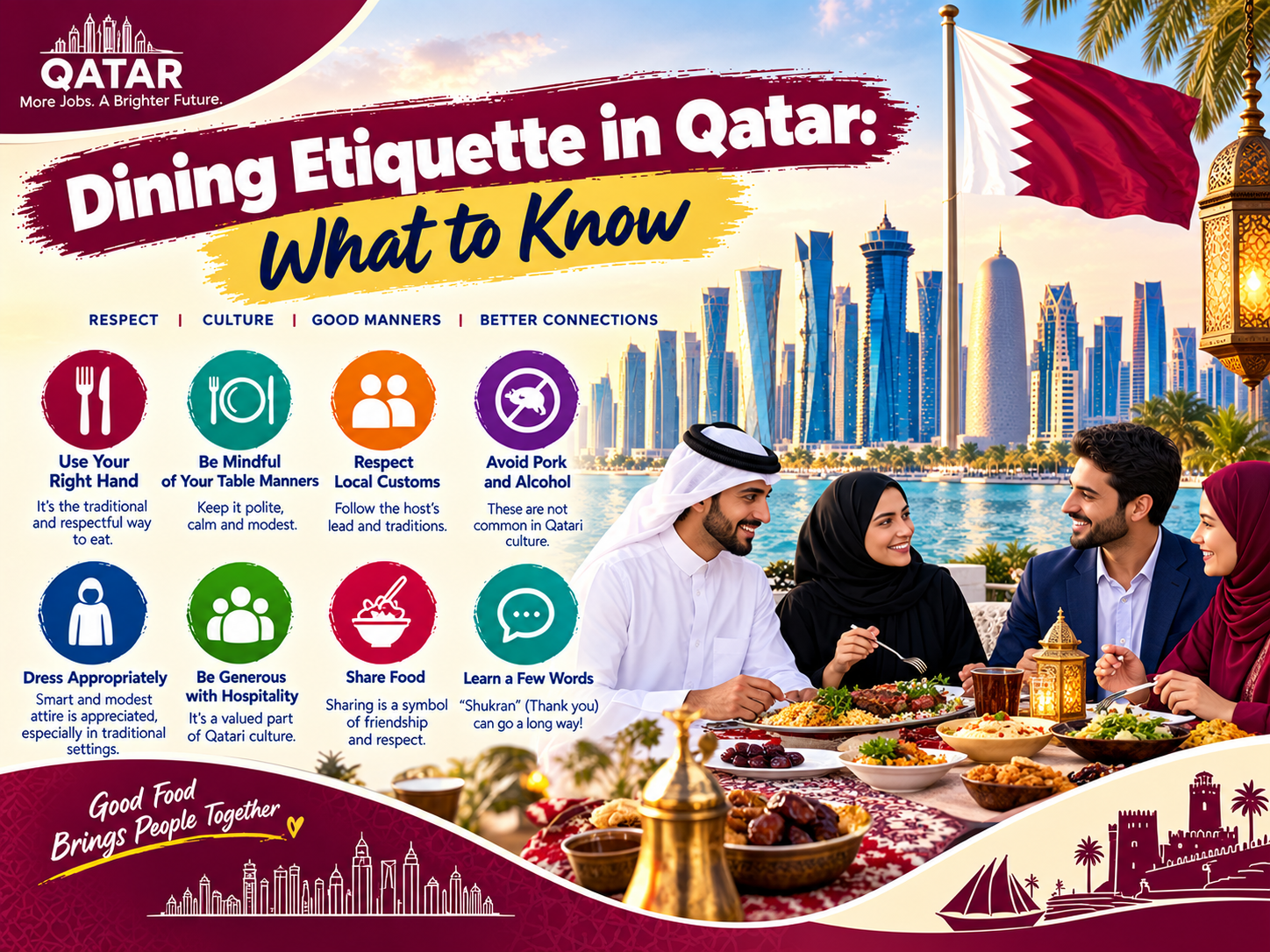
Dining Etiquette in Qatar: What to Know Before You're Hosted
The rules that actually matter when you're a guest in a Qatari home, plus what changes completely during Ramadan.
Family Restaurants in Doha: Where to Eat with Kids
Restaurants in Doha reported by Time Out Doha as good for families, including options with play areas, kids' menus, and outdoor space.
Pakistani Restaurants in Doha: Where to Find Desi Food
Well-known Pakistani restaurants in Doha for biryani, kebabs, and karahi, based on reviews and local coverage, and what to check before you go.