
Bounced Cheque in Qatar: Penalty, Settlement and What to Do
What the Penal Code and the Trading Regulation Law say about a cheque that bounces in Qatar: the criminal penalty, how a settlement closes the case, deadlines for presenting a cheque, and what the bank can and cannot do.
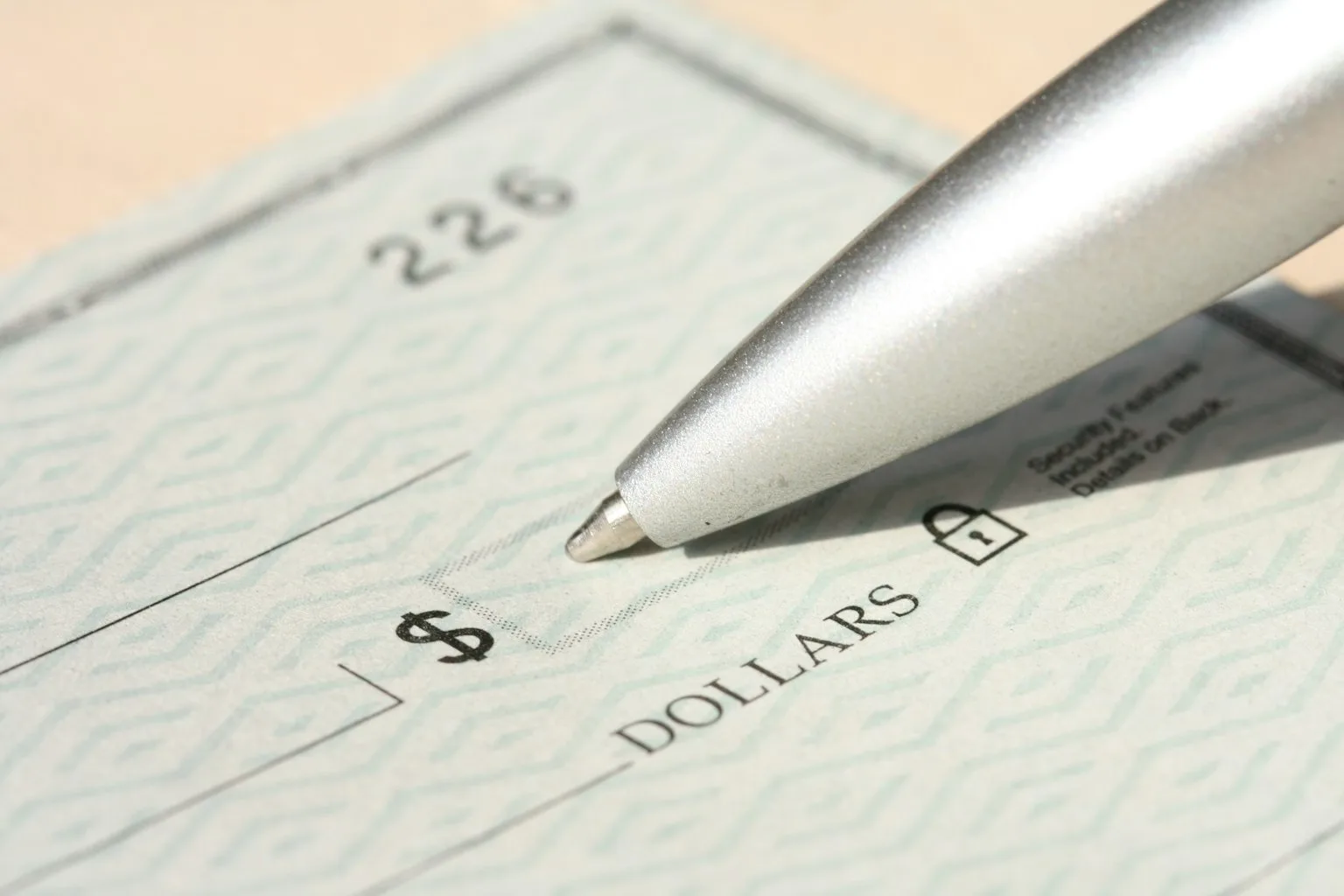
A bounced cheque is both a money problem and a criminal one in Qatar. This guide is based on the text of the Penal Code (Law No. 11 of 2004) and the Trading Regulation Law (Law No. 27 of 2006) as published on Al Meezan, Qatar's legal portal, which we read in October 2026. It explains the rules in plain language. It is general information, not legal advice, and we could not check how prosecutors and courts apply these articles today.
What counts as a cheque offence
Article 357 of the Penal Code covers anyone who acts maliciously in one of these ways:
- writing a cheque without enough funds to cover its face value;
- withdrawing all or some of the money from the account after giving a cheque, so that the account cannot cover it;
- ordering the bank not to cash or accept the cheque;
- writing or signing the cheque in a way that prevents it from being cashed;
- handing over a cheque that is due, knowing it is uncovered or cannot be cashed.
The word "maliciously" is in the text. We did not find a definition in the article, so how intent is proved is a question for a lawyer.
The penalty
Article 357 sets imprisonment of no less than three months and not more than three years, and/or a fine of no less than QR 3,000 and not more than QR 10,000. It also says that, on the request of the person concerned, the court shall order the offender to pay the value of the cheque and the expenses the holder incurred. If the payment request needs a special investigation, the court may rule on the case first and put the payment request off to another session or send it to the civil court.
Article 358 separately says that anyone who issues a cheque where there is no covered or cashable cheque, or where the money in the account is less than the cheque, faces a fine of up to QR 100,000. The English wording of this article is awkward, so we cannot say exactly when it applies instead of Article 357. Ask a lawyer which one is being used in your case.
Settlement closes the case
Article 359 says that for Article 357 offences, the victim or their attorney can ask the Public Prosecution or the court to settle the case with the offender, and that the settlement requires the case to be closed. It also says the prosecution shall stop carrying out the penalty if the settlement happens during the execution of the sentence, even after the judgment. In practice that is why many cheque cases end with a payment plan or payment in full. We did not verify how a settlement is documented or how long it takes.
Rules that decide whether a cheque is valid
The Trading Regulation Law has its own cheque rules, and they matter if you are the holder.
- **Funds must exist (Article 564).** A cheque may not be issued unless the drawer had funds with the bank at the time. If the drawer later denies it, the drawer, not the holder, has to prove the bank had the funds.
- **Post-dated cheques (Article 580).** A cheque is payable when seen, and any statement to the contrary counts as never written. If a cheque carries a later date, the bank may not pay it before that date and is liable for damages if it does.
- **Presentation deadline (Article 581).** A cheque drawn and payable in Qatar must be presented for payment within six months of the issue date on the cheque. If it was drawn outside Qatar but is payable in Qatar, the limit is eight months.
- **Stopping payment (Article 583).** The drawer can object to payment only if the cheque is lost or the holder is bankrupt or under interdiction. For any other reason, the bank may refuse and the court shall not suspend payment, even if a case is filed over the original debt.
- **Partial payment (Article 585).** If the money in the account is less than the cheque, the holder should ask for the part that is available and have it noted on the back of the cheque.
- **Time limit to claim (Article 599).** The holder's right to claim against the drawer and others becomes barred six months after the deadline for presenting the cheque.
What can happen to the bank and the issuer
Article 603 sets a fine of QR 5,000 to QR 20,000 for a bank that wrongly says there are no funds, refuses in bad faith to pay a cheque that has funds behind it, does not give the statement Article 595 requires, or does not write the account holder's name and number on each cheque. Article 604 says that after a conviction for a cheque crime, the court may withdraw the offender's chequebook and bar new chequebooks for one year. Article 605 says the Public Prosecution shall publish the names, professions, addresses and penalties of convicted persons in the Official Gazette.
If you are the holder of a bounced cheque
1. Present the cheque inside the six or eight month window and keep the bank's written proof of the refusal.
2. Keep the contract, invoice or messages that show why the cheque was issued.
3. Decide whether you want payment or a criminal case. Article 359 means a settlement can end the criminal side.
4. File the complaint with the police or prosecution. Our guide to how to file a police report in Qatar explains the Metrash route.
5. Speak to a Qatar-licensed lawyer early, especially for large amounts or if the issuer has left Qatar.
If you issued a cheque that may bounce
- Talk to the holder before the cheque is presented. Article 359 shows that settlement is part of the system.
- Do not move money out of the account or tell the bank to stop the cheque, since both are listed acts in Article 357.
- Keep proof of any payment arrangement in writing.
- If your accounts are blocked, read what to do when a bank account is frozen in Qatar.
What we could not verify
- Whether any law after the versions on Al Meezan changed Articles 357 to 359, or how courts use Article 358 in practice.
- How guarantee, security or blank cheques are treated by prosecutors.
- Whether a travel ban can be placed during a cheque case and how it is lifted.
- The exact steps and fees to file a cheque complaint, and how long cases take.
Frequently asked questions
Is a bounced cheque a criminal offence in Qatar?
Yes. Article 357 of the Penal Code punishes writing a cheque without enough funds and similar acts, with 3 months to 3 years in prison and/or a fine of QR 3,000 to QR 10,000.
Can a bounced cheque case be settled?
Yes. Article 359 says the victim or their attorney can ask the prosecution or the court to settle with the offender, and that a settlement closes the case, even after judgment.
How long is a cheque valid in Qatar?
Article 581 of the Trading Regulation Law says a cheque drawn and payable in Qatar must be presented within six months of the issue date, or eight months if drawn abroad.
Does a post-dated cheque bounce if cashed early?
Article 580 says the bank may not pay a post-dated cheque before the date on it and is liable for damages if it does.
Can I stop a cheque I wrote?
Only in the cases Article 583 lists, which are loss of the cheque or bankruptcy or interdiction of the holder. Ordering the bank not to cash it is also a listed act in Article 357.
Sources & references

Agha Ali Abbas
Founder & Editor
More on Guides
Explore everything you need to know about qatar guides.
Related articles
Your First Week in Qatar: The Complete Checklist
Exactly what to do in your first seven days in Qatar, from your Qatar ID and SIM card to the real problems new arrivals run into and how to fix them.
Qatar ID (QID): Renewal, Replacement, and Everything Else to Know
When to renew your Qatar ID, what it costs to replace a lost one, and what actually happens if you let it expire.

How to Get a Driving License in Qatar: New or Exchanged
Whether your home country license qualifies for a direct exchange or you need to sit a Qatari driving test, here's the actual process, documents, and cost.