
Buying Property in Qatar: Freehold Areas and How Ownership Works
Where non-Qataris can legally own property in Qatar under Law No. 16 of 2018, the difference between freehold and usufruct areas, and how registration works.
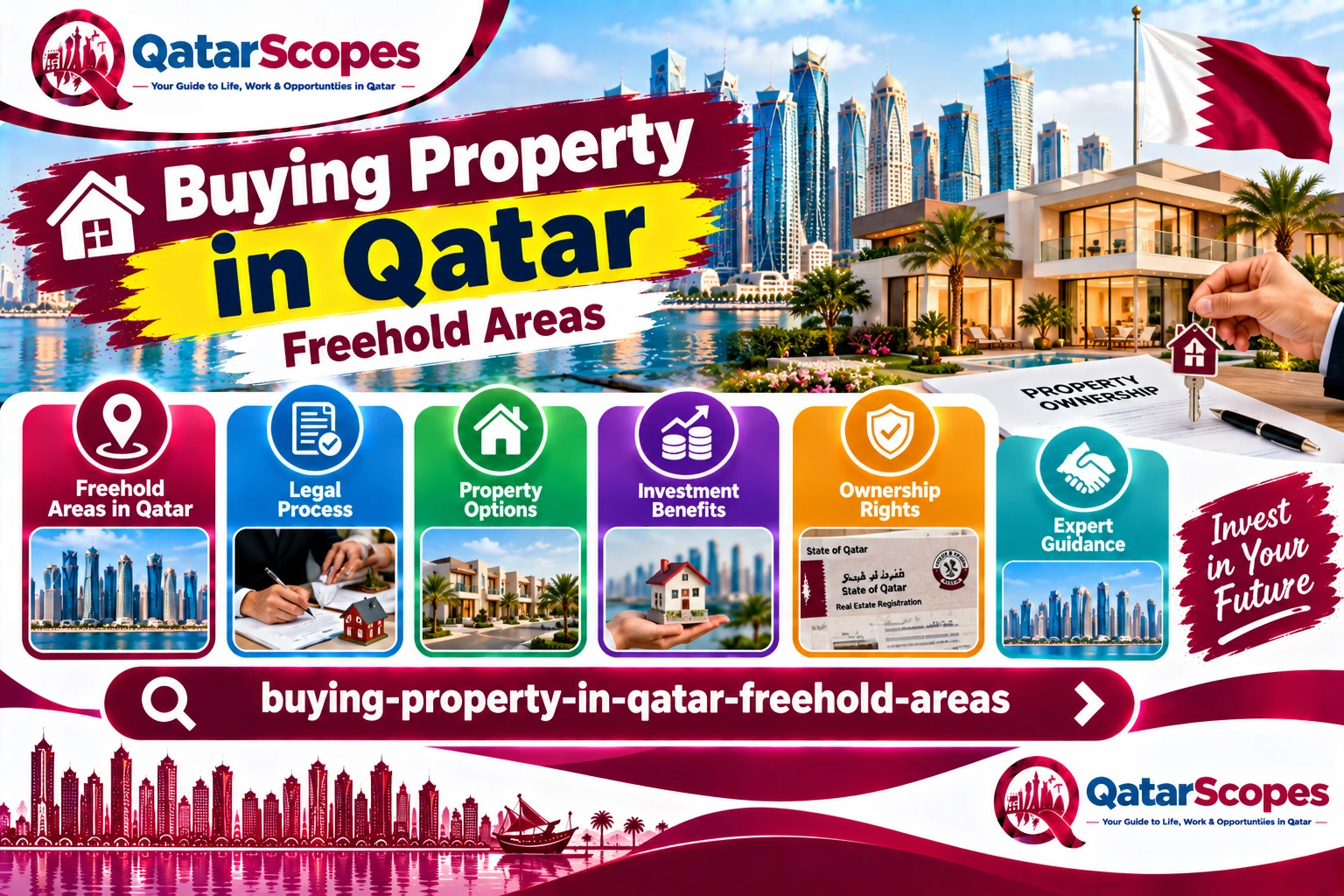
Property ownership for non-Qataris in Qatar is not open everywhere, and understanding which areas allow full ownership versus long-term use rights matters before you start looking. This guide covers the legal basis and the registration step. We read reporting on Law No. 16 of 2018 in September 2026, and did not independently verify every figure against the law's own text this session.
The legal basis
Non-Qatari ownership of real estate is governed by Law No. 16 of 2018 on the Regulation of Non-Qataris' Ownership and Usage of Real Estate. The law expanded the areas and rights available to non-Qatari individuals and legal entities, building on earlier, more limited rules.
Freehold versus usufruct
The law creates two different levels of rights, and it matters which one applies to a property you are considering.
- Freehold ownership: full ownership of the property, available to non-Qataris in a specific, limited set of designated areas.
- Usufruct rights: the right to use and benefit from a property for a fixed term, reported at up to 99 years, available in a separate, larger set of designated areas.
Reporting on this is not fully consistent on the exact freehold area count, with some sources citing 9 areas and others 10, alongside a separate, larger set of areas designated for 99-year usufruct rights, commonly reported at 16. Rather than assert one figure as definitely correct, we give the specific named areas from the sources we read below, and recommend confirming the current, complete list with the Ministry of Justice or a licensed real estate lawyer before you rely on it. Outside these designated areas, non-Qataris generally cannot own or hold long-term rights to real estate.
The freehold areas
| Area | Administrative zone (reported) |
|---|---|
| The Pearl-Qatar | 66 |
| West Bay Lagoon | 66 |
| Al Khor Resort | 74 |
| Rawdat Al Jahaniyah | Investment area |
| Al Qassar | 60 |
| Al Dafna | 61 |
| Onaiza | 63 |
| Al Wasail | 69 |
| Al Khraij | 69 |
| Jabal Theyleeb | 69 |
This list is drawn from reporting on the Council of Ministers' designation of freehold areas, not from the law's own text directly, so confirm the current list before making a decision, since designated areas can be added or adjusted over time. See our guide to The Pearl for more on that specific area.
The usufruct areas
Separately, reporting describes 16 areas designated for 99-year usufruct rights rather than full freehold, generally clustered around central, older parts of Doha rather than the newer waterfront developments used for freehold. Reported areas include Msheireb, Fareej Abdel Aziz, Al Doha Al Jadeeda, Al Ghanim Al Ateeq, Al Rufaa and Al Hitmi Al Ateeq, Al Salatha, Freej Bin Mahmoud, Rawdat Al Khail, Al Mansoura and Freej Bin Dirham, Najma, Umm Ghuwailina, Al Khulaifat, Al Sadd, Al Mirqab Al Jadeed, Freej Al Nasr, and the Doha International Airport area. A usufruct right, unlike freehold, is time-bound, but is reported to still allow the holder to dispose of and rent the property during that term, and the right is reported to be transferable to heirs rather than ending automatically on the holder's death.
What you can own
General reporting describes non-Qatari ownership under the law as covering offices, shops, residential units in complexes, and real estate development within the designated areas, for both individuals and legal entities.
Registering the purchase
A property purchase must be registered with the Real Estate Registration and Documentation Department at the Ministry of Justice. This registration step is reported as what makes the ownership valid against third parties, meaning it is not just a formality but a legal requirement for your ownership to be enforceable. General reporting describes a registration fee of 2 percent of the property value, plus an annual municipal tax of 0.5 percent of the property value, though we could not verify these figures directly against an official Ministry of Justice source this session.
Residency through property ownership
General reporting describes non-Qataris who buy property above certain value thresholds becoming eligible for a Qatar residence permit, with higher thresholds reported to unlock enhanced residency benefits. We found a commonly cited threshold of around QAR 730,000 for eligibility, and a higher figure around QAR 3,650,000 for enhanced benefits, but we could not verify either figure against an official source, so confirm current thresholds with the Ministry of Justice or a licensed real estate lawyer before relying on them for a residency decision.
What to check before you buy
- Confirm the property sits inside a currently designated freehold or usufruct area, not just a neighborhood that sounds similar.
- Confirm whether you are buying freehold or a usufruct right, since these are legally different and the difference should be clear in your contract.
- Use a licensed conveyancer or lawyer for the registration step, given how much of this process runs through Arabic-language documentation at a government department.
- If residency through property ownership is part of your plan, confirm the current value threshold and process directly, since we could not independently verify the figures.
Renting versus buying
This is our own analysis, not drawn from an official source. Buying in Qatar makes the most sense when you expect to stay long enough to justify the registration cost and any transaction fees, and when the specific unit sits clearly inside a designated freehold or usufruct area. For a shorter-term stay, or if you are still learning which neighborhood suits you, renting keeps you flexible while you get a feel for the city. See our guide to Qatar's best neighborhoods if you are still deciding where to live before committing either way, and our guide to the cost of living in Qatar for how housing costs fit into a broader budget.
Who typically buys
This is general observation, not an official statistic. Buyers in Qatar's freehold areas are commonly long-term expatriate residents, investors based outside Qatar, and Qataris themselves in the usufruct areas or other permitted structures. The Pearl-Qatar and Lusail in particular are widely marketed toward buyers who want a resort-style or master-planned setting with on-site amenities, rather than a standalone older building in a more central, older part of the city.
Working with a developer or real estate agent
This is our own analysis, not drawn from an official page. Most freehold and usufruct transactions in Qatar's newer developments run through the developer's own sales office rather than a purely private resale market, particularly for off-plan or newly completed units. For a resale of an existing unit, a licensed real estate agent can help you confirm the property's exact legal status and connect you with a conveyancer for the Ministry of Justice registration step. Either way, do not rely on a developer's or agent's own summary of your ownership rights as a substitute for reading the actual contract and confirming the freehold or usufruct designation independently.
Ongoing costs after you buy
Beyond the purchase price and registration fee, general reporting points to an annual municipal tax, reported at 0.5 percent of the property value, as an ongoing cost rather than a one-time fee. If you buy in a managed development such as The Pearl-Qatar or Lusail, you should also expect service charges or community fees covering shared amenities and maintenance, though we did not verify specific figures for any development this session. Factor both into your budget alongside the property price itself, not just the upfront registration cost.
Real problems people run into
- I found a property that looks like it is in a freehold area, but I am not sure. Confirm the exact designated area name and boundary with the developer or a lawyer, rather than assuming based on a nearby landmark.
- I am not clear whether I am buying freehold or a 99-year usufruct right. Ask directly, and make sure the distinction is written into your contract, since the two carry very different long-term rights.
- I want residency through my purchase. Confirm the current threshold directly with the Ministry of Justice or a licensed lawyer, since we could not verify the figures ourselves.
- I am not sure whether financing is available to me as a non-Qatari buyer. We could not verify current mortgage terms for non-Qatari buyers, so ask the specific bank or developer directly, since this can vary significantly by project.
- I want to compare buying against renting for a few years. See our guides to Qatar's best neighborhoods and the cost of living in Qatar for the background to make that comparison yourself.
What we could not verify
- Current registration fees and municipal tax rates, beyond commonly reported figures.
- Current residency value thresholds for property-based residence permits.
- The complete, current list of freehold and usufruct areas, since designations can be updated by the Council of Ministers, and reporting itself was inconsistent on the exact freehold area count.
- Whether financing or mortgage options are available to non-Qatari buyers, and on what terms.
Frequently asked questions
Can foreigners buy property in Qatar?
Yes, but only in designated areas. Law No. 16 of 2018 allows full freehold ownership in 10 designated areas, and 99-year usufruct rights in a further set of designated areas.
What is the difference between freehold and usufruct?
Freehold is full ownership of the property. Usufruct is the right to use and benefit from a property for a fixed term, reported at up to 99 years, in a separate set of designated areas.
Which areas allow freehold ownership for non-Qataris?
Reported areas include The Pearl-Qatar, West Bay Lagoon, Al Khor Resort, Al Qassar, Al Dafna, Onaiza, Al Wasail, Al Khraij, and Jabal Theyleeb, among others. Confirm the current list before deciding, since it can change.
Where do I register a property purchase?
With the Real Estate Registration and Documentation Department at the Ministry of Justice, which is required for the ownership to be valid against third parties.
Does buying property in Qatar give me residency?
General reporting describes residency eligibility above certain property value thresholds, but we could not verify the current figures, so confirm directly with the Ministry of Justice or a licensed lawyer.
Sources & references
Agha Ali Abbas
Founder & Editor
More on Guides
Explore everything you need to know about qatar guides.
Related articles
Your First Week in Qatar: The Complete Checklist
Exactly what to do in your first seven days in Qatar, from your Qatar ID and SIM card to the real problems new arrivals run into and how to fix them.
Qatar ID (QID): Renewal, Replacement, and Everything Else to Know
When to renew your Qatar ID, what it costs to replace a lost one, and what actually happens if you let it expire.
How to Get a Driving License in Qatar: New or Exchanged
Whether your home country license qualifies for a direct exchange or you need to sit a Qatari driving test, here's the actual process, documents, and cost.