
Getting Married in Qatar: What the Process Actually Involves
Why marriage recognition in Qatar depends on religion, how non-Muslim couples generally register through an embassy, and how to get a marriage contract officially attested.
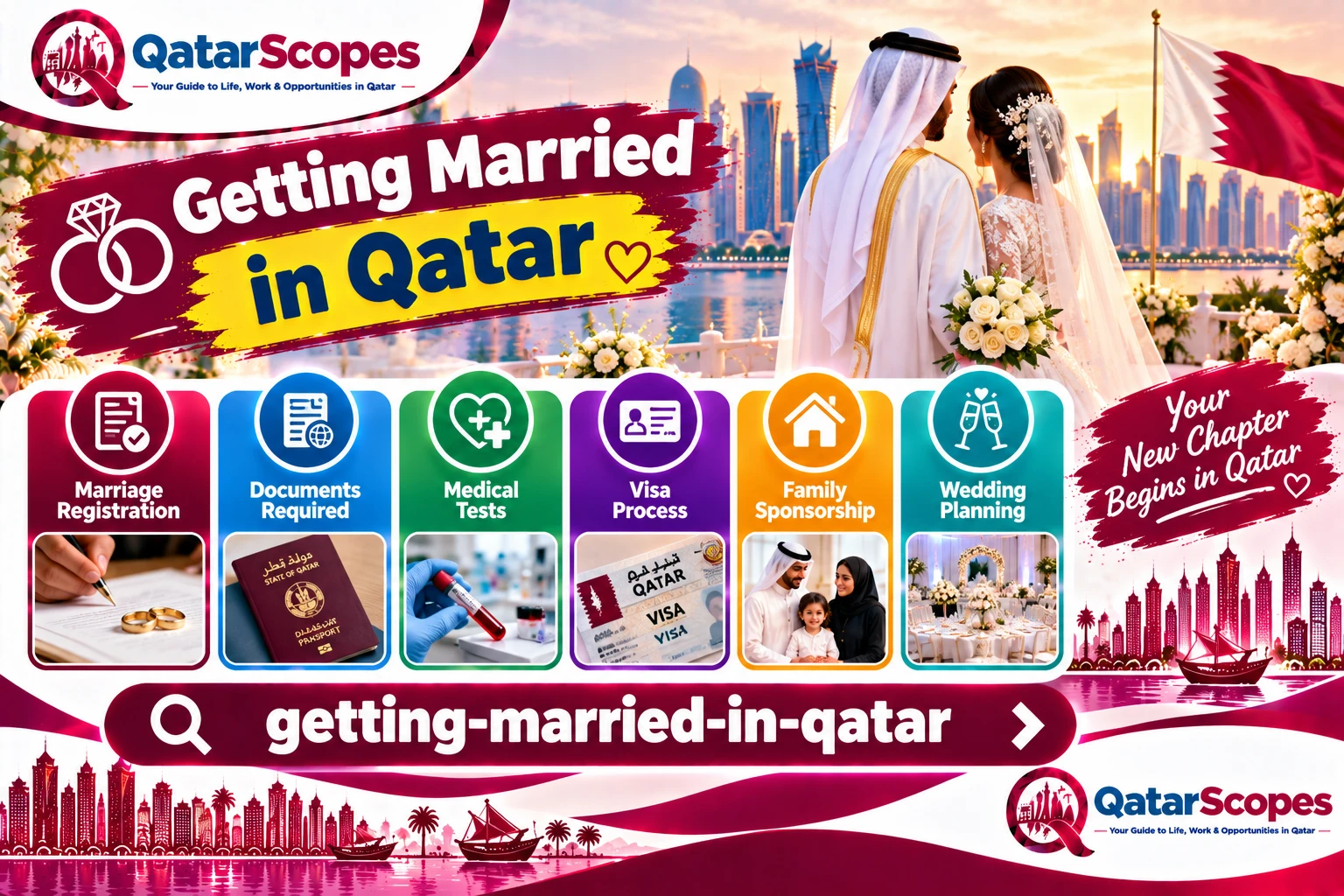
Marriage in Qatar is not a single, uniform process, since what applies to you depends heavily on your religion and your nationality. This guide separates what we could confirm officially from what is generally reported, since much of this process runs through individual embassies rather than a single Qatari government portal. We read the Ministry of Foreign Affairs' own attestation page and general reporting on embassy marriage registration in September 2026.
Why religion determines the process
General reporting is consistent that only Muslim marriages are recognized as legally valid under Qatari law. This means non-Muslim couples, including interfaith couples or those wanting a civil ceremony, are generally not able to have a marriage that is both performed and legally recognized inside Qatar in the way a civil marriage works in many other countries.
Muslim marriages
For Muslim couples, marriage is generally reported to be contracted at the Sharia Court, commonly described as located on Al Rayyan Road in the Musheireb area of Doha. The general process reported is that both parties submit documents, sign the marriage contract, known as the nikah, and pay any applicable fees at the court, after which the court registers the marriage and issues a certificate. Two male witnesses are reported to be required, and a mahr, meaning an agreed dower or gift from the groom to the bride, is reported to need to be agreed and stated in the contract. Some reporting describes a further step after the Sharia Court registration, where the marriage is also registered with the Ministry of Justice and then certified by the Ministry of Foreign Affairs. We did not independently verify this process against an official government page this session, so treat it as reported rather than confirmed, and confirm the current steps, fees, and required documents directly with the Sharia Court or a local religious institution before relying on it.
Non-Muslim marriages
General reporting describes non-Muslim couples formalizing their relationship in one of two ways: registering the marriage in their home country, or registering through their own country's embassy or consulate in Qatar, sometimes alongside a religious ceremony at a church or other institution present in Qatar. Since this route depends entirely on your specific embassy, requirements vary by nationality.
What embassies commonly ask for
This is general reporting, not a single official list, and it will vary by embassy, so confirm directly with yours. Commonly requested items include:
- A valid passport and residence permit (QID).
- A birth certificate.
- A certificate of marital status, confirming you are free to marry.
- A certificate of no objection from your embassy or consulate.
- A medical certificate from a government hospital.
- Two witnesses who are residents of Qatar.
- For non-Muslim couples specifically, a certificate of religion from your embassy or consulate.
Two examples reported for specific nationalities: registration of a civil marriage at the Embassy of India is reported to require at least one partner to be an Indian national holding a Qatar residence visa. The Philippine Embassy in Qatar is reported to only solemnize marriages between two Filipino nationals. These two examples alone show why a generic checklist can mislead you: your own embassy may have a nationality restriction, an age requirement, or a residency condition that is not reflected in a general guide, so treat the list above as a starting point for a conversation with your embassy, not a final checklist.
Interfaith and cross-nationality couples
This is our own analysis, since none of what we read addressed this scenario directly with official confirmation. Where one partner is Muslim and the other is not, or where the couple holds different nationalities, the practical path is likely to depend on which route is available to each partner individually, since a marriage recognized in one partner's home country or embassy does not automatically transfer recognition to the other's. If this describes your situation, it is worth speaking to both relevant embassies, or a lawyer familiar with cross-border family law, before assuming either the Sharia Court route or an embassy route applies cleanly to you.
Getting a marriage contract attested
If you already have a marriage contract, whether from an embassy, a religious authority, or another country, and you need it to carry legal status for use outside Qatar, the Ministry of Foreign Affairs offers an attestation service for personal status documents, which includes marriage contracts. Its own page states:
- The document must already carry a set of live seals and signatures, ending with a seal and signature from a Qatari mission abroad or a foreign mission accredited to Qatar's Department of Consular Affairs.
- Qatari government authorities are the competent body for attesting true copies of documents they themselves issued.
- The Department of Consular Affairs will not attest a document that violates regulations in force in Qatar.
- The service is available through the Ministry's own e-services portal (mofa.gov.qa), or in person at the Department of Consular Affairs, Sunday to Thursday, 7:30 AM to 1 PM.
- The fee listed is QR100.
- For help, the Ministry lists the Government Contact Center on 109, available 24/7, or the Attestation Department directly on 40111188.
Where ceremonies typically happen
This is general reporting, not an official rule. Muslim marriage ceremonies are generally reported to center on the Sharia Court registration itself, with any separate celebration or reception held wherever the couple chooses. Non-Muslim couples are more likely to hold a religious ceremony at a church or similar institution present in Qatar, alongside or separate from their embassy's civil registration, since Qatar hosts several churches used by its Christian expatriate community. Neither of these ceremony details substitutes for the actual legal registration step described above.
After the marriage
If you are sponsoring a spouse to join you in Qatar, or adding them to your residency, that runs through the family visa process, not the marriage registration itself. See our guide to the family visa sponsorship process for what that generally involves. If your spouse is already in Qatar on their own sponsorship and you want to update their status, or you need your own QID updated to reflect a new marital status, confirm directly with the Ministry of Interior what documentation from your marriage registration they require, since we did not verify this update process this session.
Practical steps to take early
- Start gathering the documents your embassy lists as far in advance as possible, since items like a certificate of no objection or a medical certificate can themselves take time to obtain.
- Confirm your embassy's specific nationality rules before assuming your situation is straightforward, given examples like the Philippine Embassy's rule limiting marriages to two Filipino nationals.
- If you will need the marriage recognized outside Qatar later, plan for the MOFA attestation step at the same time you register, rather than treating it as an afterthought once you already need the document urgently.
- Keep multiple certified copies of any marriage certificate or contract you receive, since you are likely to need one for immigration, banking, and other administrative purposes over time.
Common mistakes
- Assuming a marriage performed at an embassy is automatically recognized as a Qatari civil marriage. It is not, for non-Muslim couples.
- Trying to get a document attested by MOFA before it already carries the required chain of seals and signatures.
- Not confirming your specific embassy's nationality restrictions, such as the Philippine Embassy's rule limiting marriages to two Filipino nationals.
- Leaving the attestation step until just before you need the document for an official purpose outside Qatar, rather than early.
What we could not verify
- The specific government process, documents, and fees for arranging a Muslim marriage in Qatar.
- Complete, current requirements for every embassy, since these vary by nationality and were not independently checked one by one.
- Processing times for either embassy registration or MOFA attestation.
Frequently asked questions
Can non-Muslim couples get legally married in Qatar?
Generally not inside Qatar itself. Non-Muslim couples typically register their marriage through their embassy or consulate in Doha, or in their home country.
How do I get a marriage contract attested in Qatar?
Through the Ministry of Foreign Affairs' attestation service for personal status documents, for a fee of QR100, at the Department of Consular Affairs, Sunday to Thursday, 7:30 AM to 1 PM, or online at mofa.gov.qa.
What documents do embassies commonly ask for?
Commonly reported items include a valid passport and QID, a birth certificate, a certificate of marital status, a certificate of no objection, a medical certificate, and two resident witnesses, though this varies by embassy.
Does getting married in Qatar automatically give my spouse residency?
No. That is a separate process. See our guide to the family visa sponsorship process for how that works.
Who do I contact for help with document attestation?
The Government Contact Center on 109, available 24/7, or the Ministry of Foreign Affairs' Attestation Department directly on 40111188.
Sources & references

Agha Ali Abbas
Founder & Editor
More on Guides
Explore everything you need to know about qatar guides.
Related articles
Your First Week in Qatar: The Complete Checklist
Exactly what to do in your first seven days in Qatar, from your Qatar ID and SIM card to the real problems new arrivals run into and how to fix them.
Qatar ID (QID): Renewal, Replacement, and Everything Else to Know
When to renew your Qatar ID, what it costs to replace a lost one, and what actually happens if you let it expire.
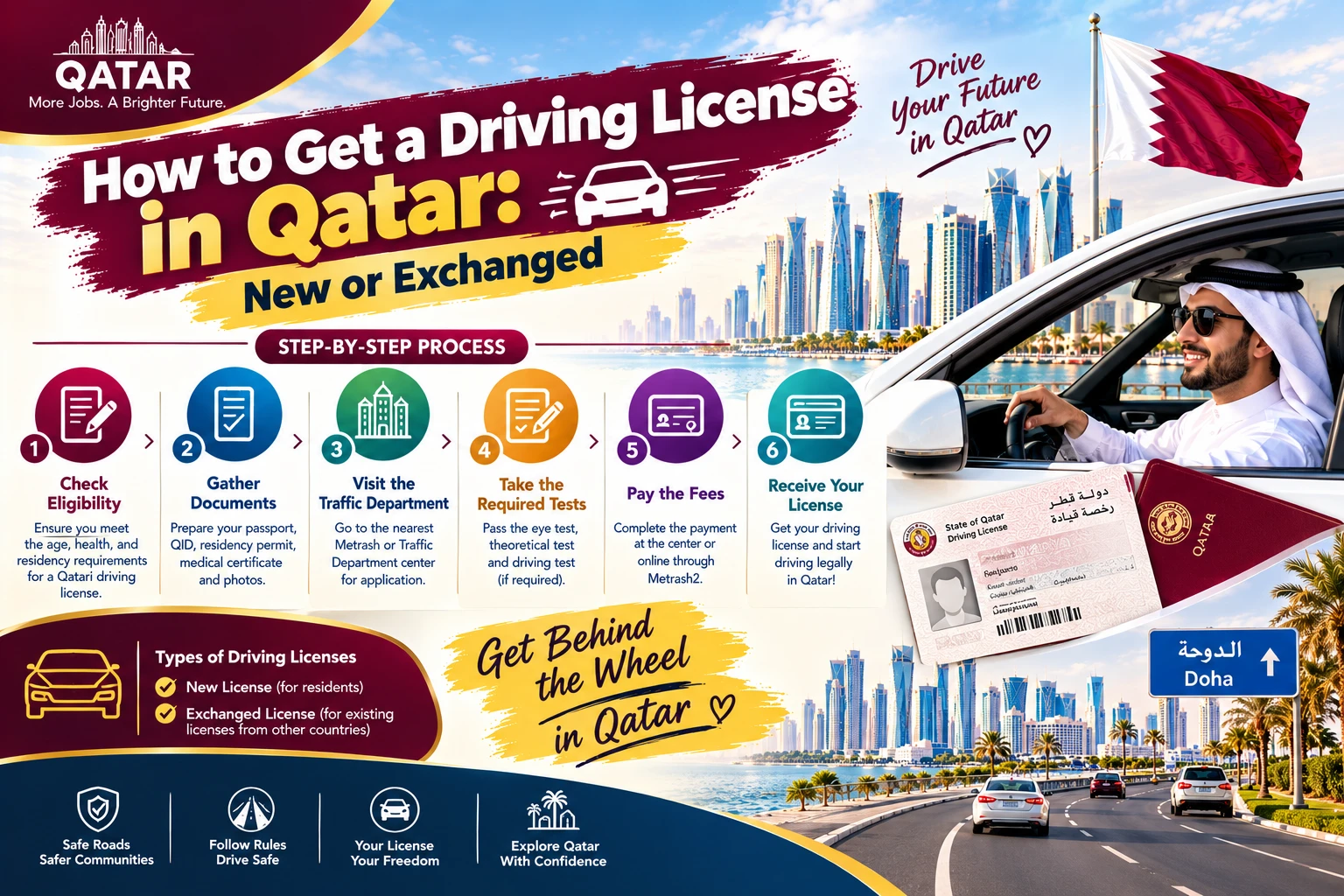
How to Get a Driving License in Qatar: New or Exchanged
Whether your home country license qualifies for a direct exchange or you need to sit a Qatari driving test, here's the actual process, documents, and cost.