
An Overview of Qatar's Economy
Qatar's economy shrank 7.0 percent in the first quarter of 2026 as gas exports were hit, while the non-oil economy grew 3.5 percent. What that means and what to watch.
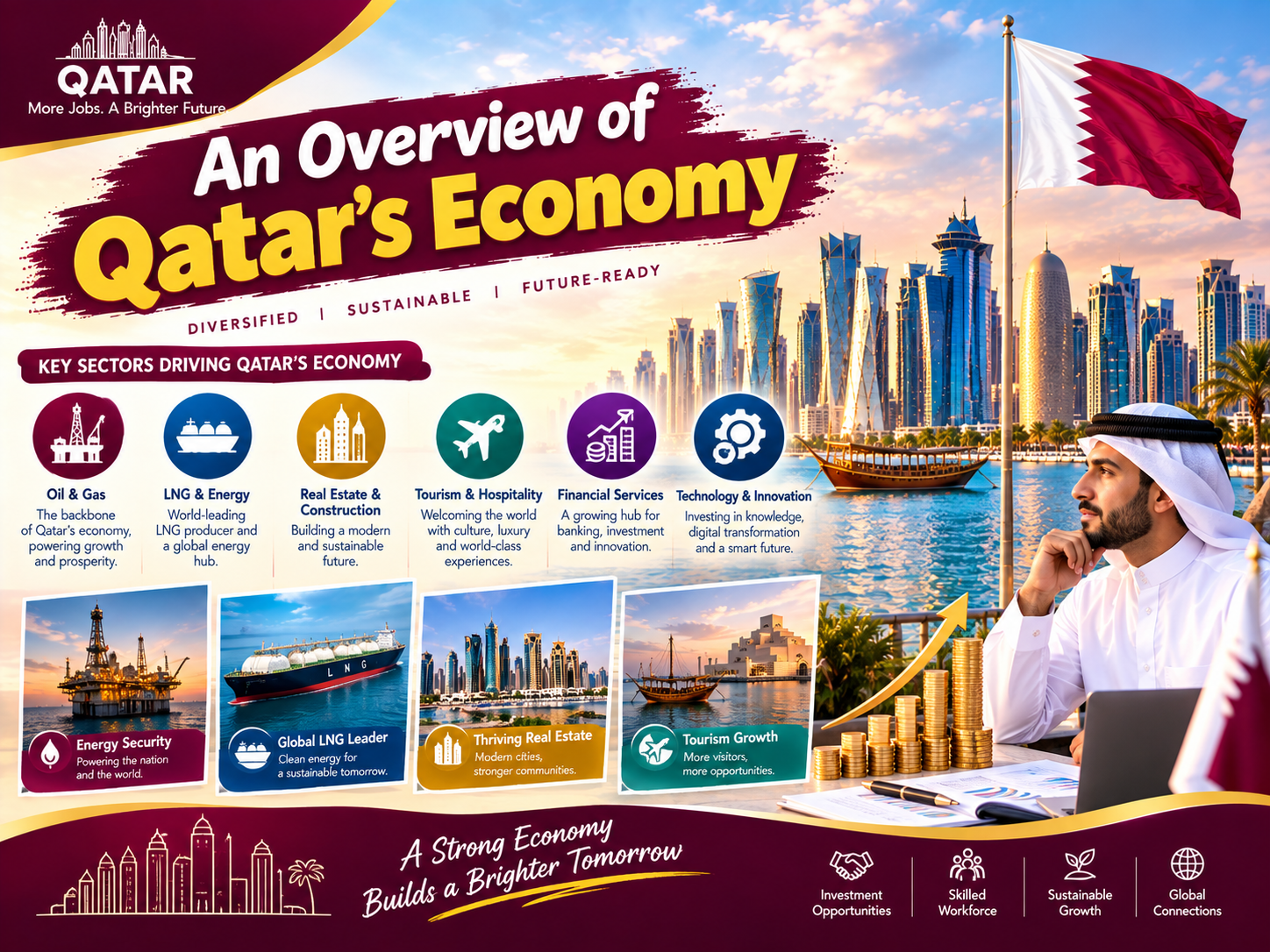
Qatar is still an energy economy, and 2026 has shown how much that matters. This page was originally written before the year's disruption and projected strong LNG-led growth. That projection no longer holds, so we rewrote it using the latest figures we could verify in September 2026. We attribute each figure to its source, and we say where we could not confirm something.
What happened to the economy in 2026
The Peninsula reported on 31 August 2026 that the National Planning Council put real GDP growth at negative 7.0 percent year on year in the first quarter of 2026. It said the hydrocarbon sector declined 25.8 percent, which it attributed to regional restrictions affecting shipping and exports, while the non-hydrocarbon sector grew 3.5 percent.
| Measure, Q1 2026 versus Q1 2025 | Change |
|---|---|
| Real GDP | -7.0% |
| Hydrocarbon sector | -25.8% |
| Non-hydrocarbon sector | +3.5% |
We only found first-quarter figures. We did not find a verified second-quarter GDP release, so check the National Planning Council for newer data.
LNG: damage and a delayed expansion
Qatar remains one of the world's largest LNG exporters, but 2026 has been hard on the sector. At the Qatar Economic Forum in New York on 20 September 2026, QatarEnergy's chief said, as reported by Energy Connects, that an attack in early March damaged about 17 percent of the Ras Laffan plant, and that the first production train of the North Field East expansion is now expected in the first half of 2027, later than the 2026 start once planned. He said later trains depend on the Strait of Hormuz staying open for equipment deliveries, and that repairs will take years. Sources differ slightly on the month of the attack, February or early March, so we say early 2026.
The central bank governor said at the same forum, as reported by Arab News, that Qatar is working on a new expansion project to double production capacity to 145 million tonnes per year by 2030. That is a stated plan, not a confirmed outcome.
The non-oil economy is carrying the growth
Arab News reported on 21 September 2026 that the Qatar Central Bank governor put the non-hydrocarbon share of GDP at nearly 70 percent, up from 40 percent in 2011. Earlier reports cited a figure nearer two-thirds, so the exact share depends on the period and method. Treat it as roughly two-thirds to 70 percent.
The Peninsula's report on first-quarter growth listed these non-oil sectors as growing:
| Sector | Year-on-year growth, Q1 2026 |
|---|---|
| Wholesale and retail trade | +9.0% |
| Construction | +6.2% |
| Real estate | +6.1% |
| Financial and insurance activities | +4.8% |
| Public administration | +4.0% |
The long-term policy: NDS3
Qatar's Third National Development Strategy, covering 2024 to 2030, aims for 3.4 percent annual growth in the non-hydrocarbon economy and a target of attracting 100 billion dollars in foreign direct investment by 2030, according to The Peninsula's report on the strategy. In May 2025, Invest Qatar unveiled a 1 billion dollar incentives program aimed at priority sectors including advanced industries, logistics, the digital economy, and finance. Reports describe support of up to 40 percent of eligible local investment costs over five years, with a minimum investment of 25 million riyals. We did not read the program's official terms, so confirm the details with Invest Qatar before relying on them.
What this means if you live or work here
This is our own analysis, not an official forecast. A contraction driven by gas exports does not automatically mean weaker conditions for every worker or business, since the sectors the National Planning Council reported as growing, including trade, construction, real estate, and finance, are the everyday economy most residents deal with. But we found no verified data on hiring, wages, or prices during this period, so we cannot say how any specific job market is affected. For current hiring information, see our guide to industries hiring in Qatar, which we are reviewing for the same reason. For starting a company, see our business setup guide, and for household costs, our guide to the cost of living in Qatar.
What to watch next
- The National Planning Council's next quarterly GDP release.
- Whether shipping through the Strait of Hormuz normalizes, which QatarEnergy's chief said affects both exports and equipment deliveries.
- Whether the first North Field East train starts in the first half of 2027, as now expected.
- Tourism arrivals. See our note on 2026 visitor numbers.
What we could not verify
- Any second-quarter 2026 GDP figure.
- The exact date of the attack on Ras Laffan, since sources differ.
- The official terms of Invest Qatar's incentives program.
- Any data on how the 2026 disruption has affected hiring, salaries, or prices.
Frequently asked questions
How is Qatar's economy doing in 2026?
The National Planning Council put real GDP at negative 7.0 percent year on year in the first quarter of 2026, with the hydrocarbon sector down 25.8 percent and the non-hydrocarbon sector up 3.5 percent. We found no verified second-quarter figure yet.
Why did Qatar's GDP fall in 2026?
Reports attribute the hydrocarbon decline to regional restrictions affecting shipping and exports, and to damage at the Ras Laffan LNG facility.
What share of Qatar's GDP is non-oil?
The central bank governor put it at nearly 70 percent in September 2026, up from 40 percent in 2011. Earlier reports cited nearer two-thirds, so it depends on the period and method.
When will Qatar's LNG expansion start?
QatarEnergy's chief said on 20 September 2026 that the first North Field East train is expected in the first half of 2027, later than the 2026 start once planned.
What is Qatar's diversification strategy called?
The Third National Development Strategy, covering 2024 to 2030, targets 3.4 percent annual non-hydrocarbon growth and 100 billion dollars in foreign direct investment by 2030.
Sources & references
- The Peninsula, Qatar's non-hydrocarbon GDP grows by 3.5% YoY in Q1 2026 (31 Aug 2026)
- Energy Connects, Qatar's energy chief sees LNG expansion startup in 2027 (Sep 2026)
- Arab News, Qatar's non-hydrocarbon GDP share rises to about 70%: QCB Governor (21 Sep 2026)
- The Peninsula, Qatar targets 3.4% non-hydrocarbon GDP growth, $100bn FDI by 2030
- Invest Qatar, $1 billion incentives programme
Agha Ali Abbas
Founder & Editor
More on Business
Explore everything you need to know about qatar business.
Related articles
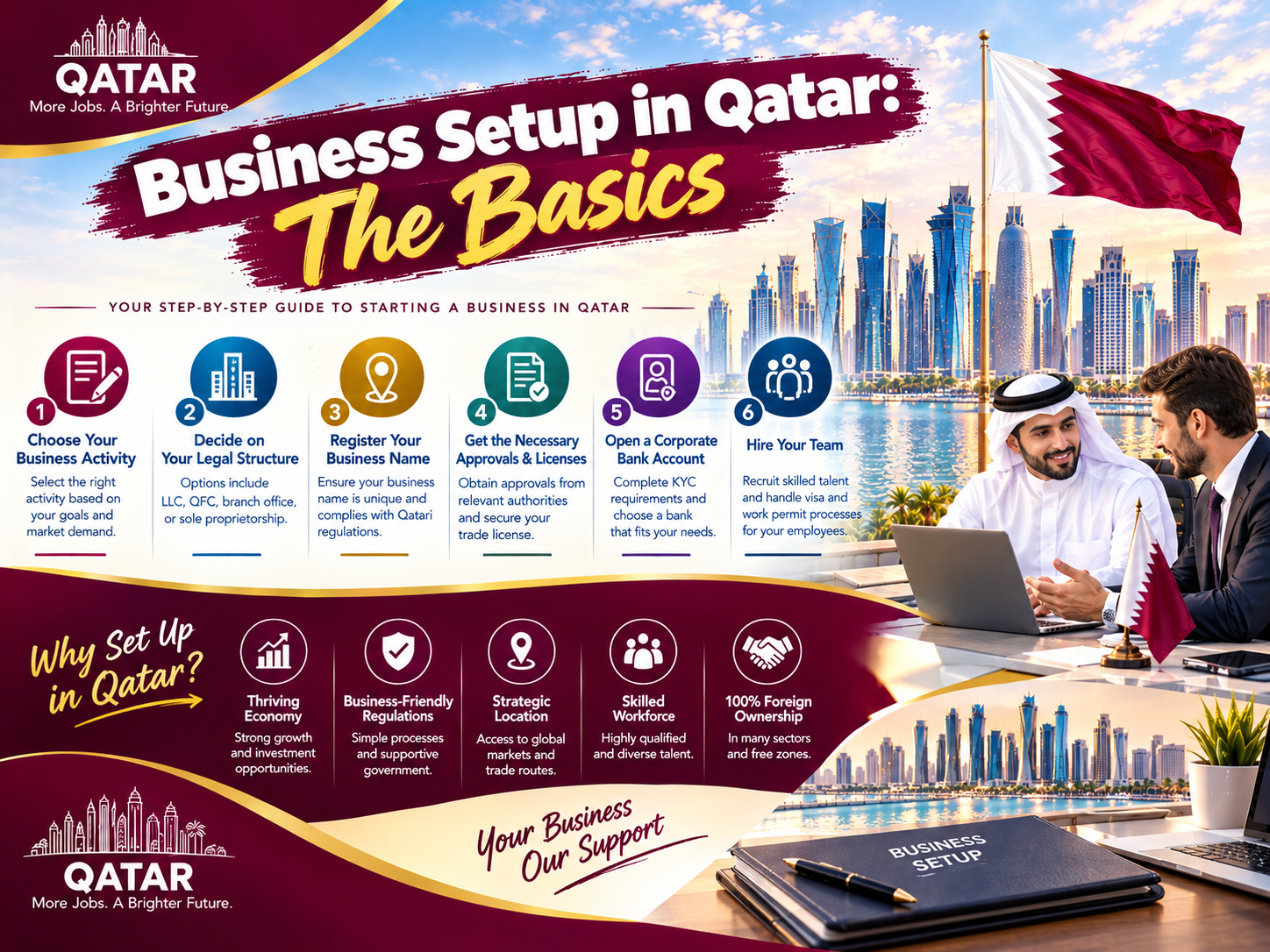
Business Setup in Qatar: The Basics
Mainland, free zone, or QFC: which structure actually fits your business, and the limitation most founders miss until it's too late.
How to Check a Company in Qatar: CR Number, Trade License and Job Offer Scams
Before you accept a job offer, pay a fee or sign a deal in Qatar, check the company. What a commercial registration and trade license are, the official tools to use and the red flags to watch.
Commercial Registration (CR) Renewal in Qatar: Steps, Fees and Late Renewal
Qatar companies renew their commercial registration online through the Single Window. The steps, the reported fees per activity and branch, what happens if you renew late, and what we could not check.