
Income Tax in Qatar: What Expats Actually Pay
Qatar has no tax on personal employment income, according to Hukoomi, but side businesses and rental income can be taxed. What the official article says and where the gaps are.
Expats often hear that Qatar is tax free, but the full picture has limits. This guide follows Hukoomi's Qatar's Tax System article, dated 12 January 2023, which we read in September 2026. It is general information, not tax advice, and it may not cover every case.
Salary and wages
Hukoomi's article says there is no tax on personal income, and that employees take home their wages and salaries without any tax deducted. It describes the total income of Qatari nationals and GCC residents in Qatar as exempt from tax. It defines a resident as anyone who owns permanent accommodation in Qatar, or who stayed in Qatar for more than 183 days continuously or intermittently within 12 months, or whose vital interests are linked to Qatar.
Where tax can apply: commercial activity
The same article says an individual who exercises any type of commercial activity with the intention of gaining income must pay tax under the Companies Tax Law, and it points to Law No. 24 of 2018, the Income Tax Law, for detail. It defines commercial activity broadly, as any profession, vocation, service, trade, industry, speculation, contractual work, or any profit and income making business. That means a side business or freelance work may be treated differently from your salary. We did not find guidance on how a freelance arrangement is classified, so ask the General Tax Authority before you start one.
Rental income
Hukoomi's article says rental income is subject to a fixed tax rate of 10 percent. If you own a property and rent it out, check your obligations. See our guide to buying property in Qatar and to renting an apartment for how leases are registered.
Company tax
The article says the tax rate is 10 percent of a company's total state income, paid annually, and that this fixed rate applies to businesses, not to individuals' income. It lists total state income as including income from operating a commercial activity within Qatar, contracts executed wholly or partly in Qatar, property in Qatar, services provided by the main company or branches, and income on loans provided by Qatar. It also lists exemptions, including natural persons who do not carry out a taxable activity, certain interest and returns, and small handcraft businesses with three employees or fewer. If you plan a company, see our guide to business setup in Qatar, since free zones describe their own tax terms.
Other taxes
The article says there are no other taxes, and calls Qatar a low-taxation country. It is dated 2023, so we cannot say whether new taxes have been introduced since. Check the General Tax Authority's site for current rules.
What this means in practice
This is our own practical summary.
- Your employment salary is not taxed at source, according to Hukoomi.
- A business, freelance income, or trading may be taxable, so get advice before you start.
- Rental income is subject to 10 percent according to the article.
- Your home country may still tax you. Qatar's rules do not decide that, so check your home country's rules on residency and worldwide income.
- Check contracts for allowances and end of service. See our guides to the Qatar minimum wage and end of service gratuity.
Common mistakes
- Assuming every kind of income is untaxed, including business and rental income.
- Forgetting that your home country's tax rules may still apply to you.
- Relying on a 2023 article without checking the General Tax Authority's current guidance.
- Starting a side business without checking whether it counts as a taxable activity.
What we could not verify
- Whether any tax rules changed after January 2023.
- How a freelance or side income arrangement is classified.
- Registration requirements with the General Tax Authority for individuals.
- How your home country treats income earned in Qatar.
Frequently asked questions
Do expats pay income tax in Qatar?
Hukoomi says there is no tax on personal income, so employees take home their wages and salaries with no tax deducted. Commercial activity and rental income are treated differently.
Is rental income taxed in Qatar?
Hukoomi's article says rental income is subject to a fixed tax rate of 10 percent. Confirm your case with the General Tax Authority.
What is the company tax rate in Qatar?
Hukoomi says 10 percent of a company's total state income, paid annually. This applies to businesses, not to individuals' salaries.
Do I pay tax on a side business in Qatar?
Hukoomi says an individual who carries on any commercial activity to gain income must pay tax under the tax law. Ask the General Tax Authority how your activity is classified.
Are there other taxes in Qatar?
The Hukoomi article, dated January 2023, says there are no other taxes. Check the General Tax Authority for any newer rules.
Sources & references

Agha Ali Abbas
Founder & Editor
More on Living
Explore everything you need to know about living in qatar.
Related articles

Cost of Living in Qatar: What to Actually Expect
Real rent ranges by neighborhood, what a single person versus a family actually spends, and why the tax-free salary changes the math.

How the Healthcare System Works in Qatar
What the health card actually covers, when private care is worth it, and the insurance rule expats often miss before arrival.
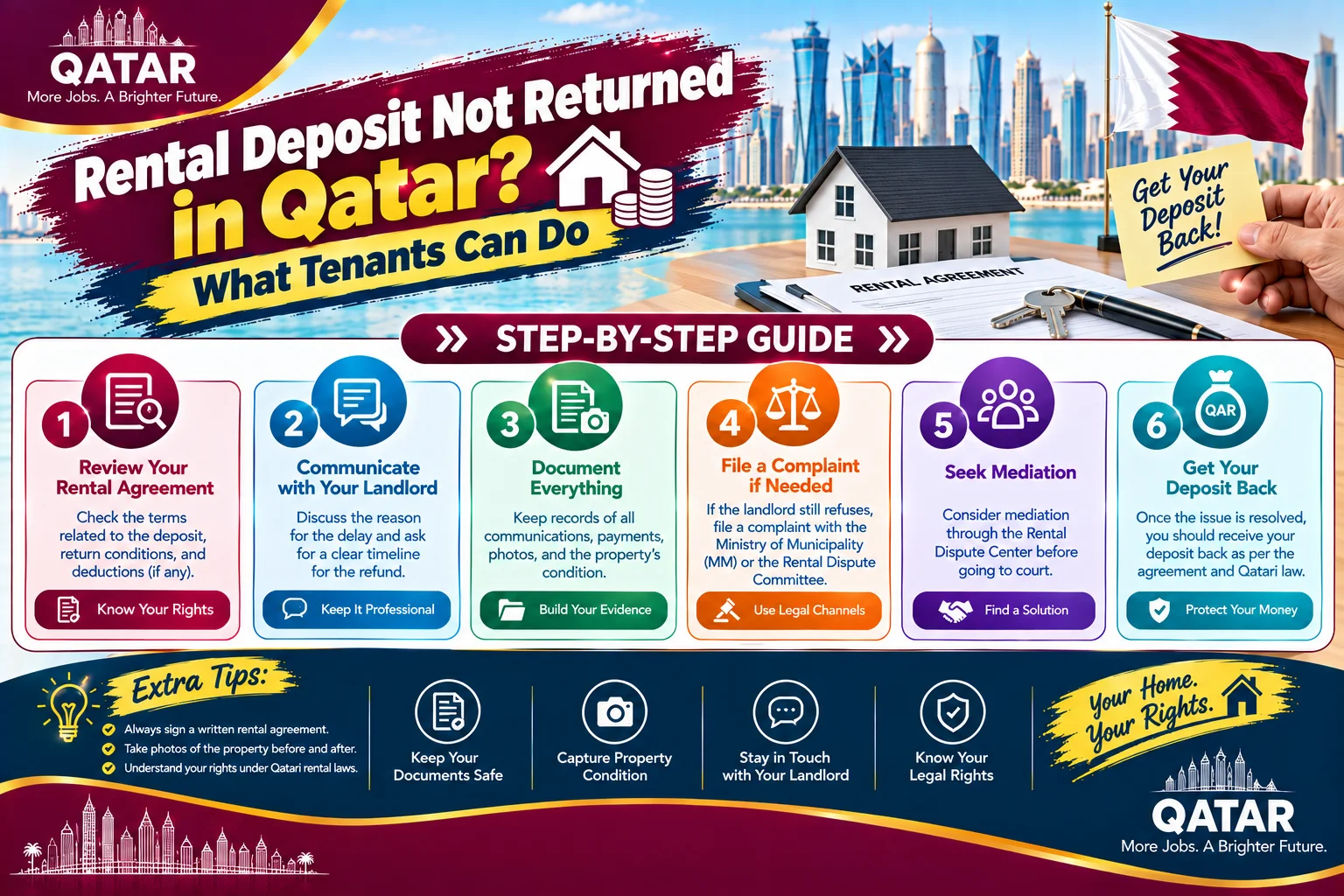
Rental Deposit Not Returned in Qatar? What Tenants Can Do
Landlord keeping your security deposit? Here is what the law generally allows, what changed on 3 September 2026, and the steps that get your money back.