
Is Crypto Legal in Qatar? The QCB Circular, the QFC Framework and What It Means for Residents
Banks in Qatar are barred from dealing in bitcoin, the Qatar Financial Centre excludes cryptocurrencies from its 2024 digital asset framework, and no source clearly says whether an individual can hold crypto. What is confirmed and what is not.
Few questions about money in Qatar get more confident wrong answers than this one. Some websites say crypto is banned, others say it is allowed, and both can be technically right about different things. This guide separates what is written down from what is assumed. We used a regulatory tracker reviewed on 5 October 2026, law firm and news summaries of the 2018 circular and the 2024 framework, and a Qatar Central Bank summary of its digital banking and payment work. We could not read the circular itself. This is not legal or investment advice.
What is confirmed?
- **Banks and financial institutions.** In February 2018 the Qatar Central Bank (QCB) issued Circular No. 6 of 2018, telling every bank and financial institution not to deal in bitcoin or similar assets, open accounts for them or process payments to buy them. A 2026 tracker says the ban still stands.
- **The Qatar Financial Centre.** The QFC Regulatory Authority issued an alert in December 2019 barring firms in the QFC from exchanging, transferring or safekeeping virtual assets, and confirmed on 2 September 2024 that it still applies.
- **A tokenization framework.** The QFC Digital Assets Framework took effect on 1 September 2024. It covers tokenization of real rights in property such as securities, sukuk, funds, commodities and real estate. It licenses services such as token generation, custody, exchange and transfer. It excludes cryptocurrencies and stablecoins, which are described as excluded tokens.
- **Central bank digital currency.** The QCB runs a wholesale digital currency programme for selected banks. It does not cover retail users.
- **A real estate tokenization law is being drafted.** One tracker says the Cabinet approved a draft real estate tokenization law on 26 August 2026 and that public comment closed on 13 September 2026. We could not confirm this elsewhere.
What is not clear?
The sources describe bans on institutions. None of them clearly states a penalty for an individual who owns crypto, or says that personal ownership is a crime or is allowed. One tracker rates retail access as restricted and says crypto is legal only in narrow cases. We found no source for any penalty on individuals. Do not rely on a website that quotes a fine or a jail term for holding crypto in Qatar without naming the legal text.
What does this mean in practice?
- **Your Qatari bank.** Expect it to refuse transfers to crypto exchanges and to ask questions about transfers it suspects are crypto related. A refused or frozen transfer is a risk you carry. See what to do when a bank account is frozen.
- **Salary and savings.** Do not put money you need into assets that your bank is barred from supporting.
- **Employers and the QFC.** If you work for a firm in the QFC, its virtual asset restriction applies to the firm.
- **Scams.** Crypto is a favorite for investment fraud. Be careful with anyone who promises returns, and see how to spot fake job offers and scams for the pattern.
- **Sending money home.** Use licensed channels. See sending money abroad from Qatar and compare transfer costs.
What about tokenized assets and digital banks?
The QFC framework is aimed at tokenized real assets, not at coins like bitcoin. The QCB has also published a regulatory framework for digital banks and licensed payment firms, which is a different area. A news report says the QCB gave Karty an e-money payment licence in January 2026. These are regulated payment services, not crypto. For everyday banking see our guide to banking and money in Qatar.
If you already hold crypto
1. Do not move it through your Qatari bank account without checking with the bank first.
2. Keep records of where it came from.
3. Do not borrow against it.
4. Get advice from a licensed lawyer in Qatar for your own case.
5. If you plan to leave, think about how you will handle estate questions: see expat inheritance in Qatar.
What we could not verify
- The text of QCB Circular No. 6 of 2018 and of the QFCRA alert.
- Any penalty for an individual holding crypto.
- The draft real estate tokenization law.
- Any change in the rules during 2026.
Part of our guide to banking and money in qatar
Start with the full guide: Banking and Money in Qatar: Accounts, Cards, Loans and Transfers Guide
More on: costs, tax and estates
- Qatar's Sweetened Drinks Tax 2026: What Is Taxed, What Is Not and What to Expect
- Qatar's Chicken and Vegetable Import Tariffs 2026: 18% on Chicken and a Seasonal 15%
- Cost of Living in Qatar: What to Actually Expect
- Income Tax in Qatar: What Expats Actually Pay
- Power of Attorney in Qatar: Fees, Validity and Using One From Abroad
- Expat Inheritance in Qatar: Frozen Accounts and Heir Certificates
Frequently asked questions
Is bitcoin legal in Qatar?
Qatar Central Bank Circular No. 6 of 2018 bars banks and financial institutions from dealing in bitcoin and similar assets. The sources we found do not clearly say whether an individual may hold it, so treat it as restricted.
Can I buy crypto with my Qatari bank account?
Banks are barred from opening accounts for crypto or processing payments to buy it, so expect transfers to crypto exchanges to be refused.
What is the QFC digital asset framework?
A framework in force since 1 September 2024 for tokenized real assets such as securities and real estate. It excludes cryptocurrencies and stablecoins.
Sources & references

Agha Ali Abbas
Founder & Editor
More on Living
Explore everything you need to know about living in qatar.
Related articles

Cost of Living in Qatar: What to Actually Expect
Real rent ranges by neighborhood, what a single person versus a family actually spends, and why the tax-free salary changes the math.

How the Healthcare System Works in Qatar
What the health card actually covers, when private care is worth it, and the insurance rule expats often miss before arrival.
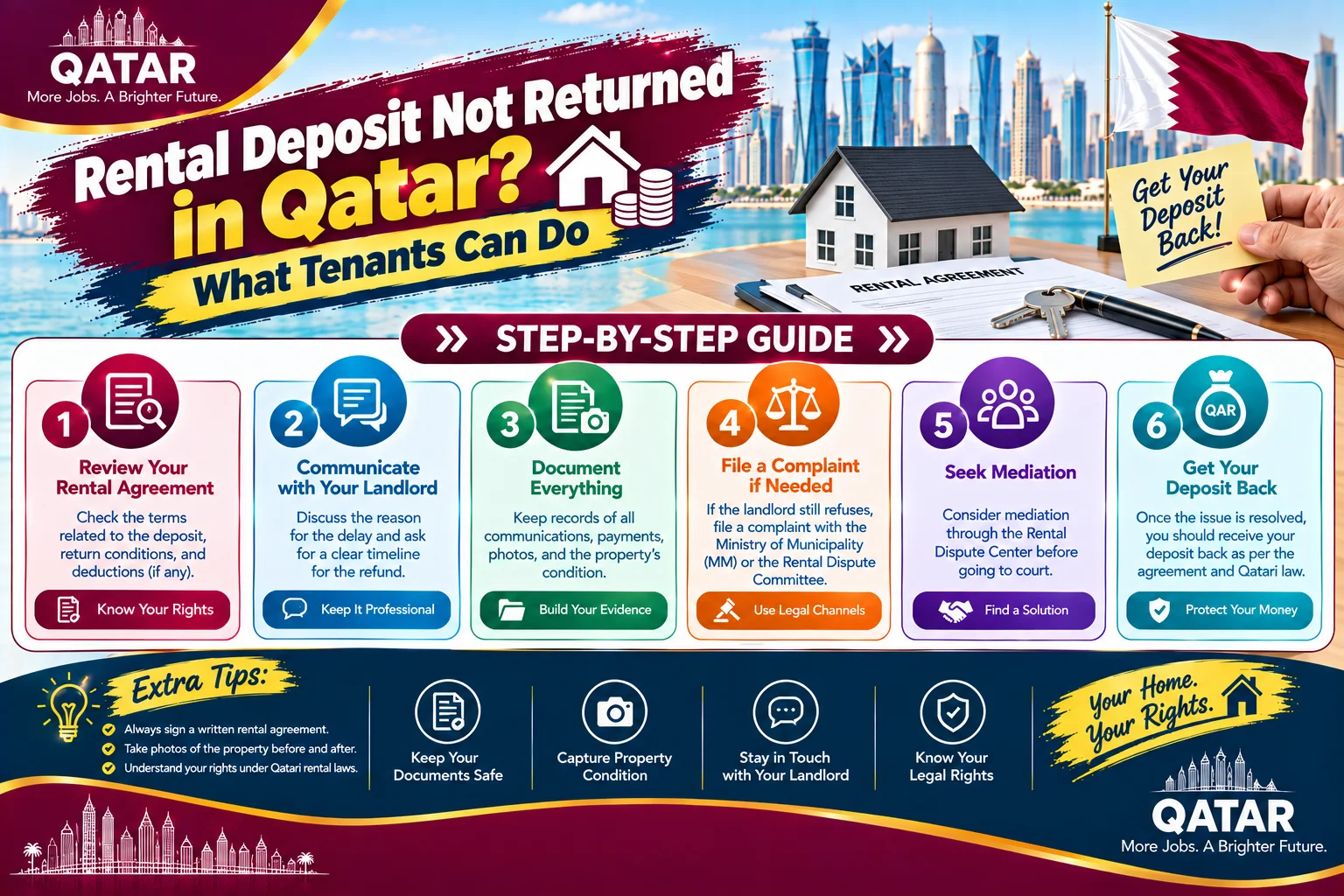
Rental Deposit Not Returned in Qatar? What Tenants Can Do
Landlord keeping your security deposit? Here is what the law generally allows, what changed on 3 September 2026, and the steps that get your money back.