
Absconding Case in Qatar: What It Means, How to Check It and What to Do
Law No. 21 of 2015 says a worker must not leave the employer who brought them in, and the employer must report it within 14 days. What the law says, the penalties, and what you can do.
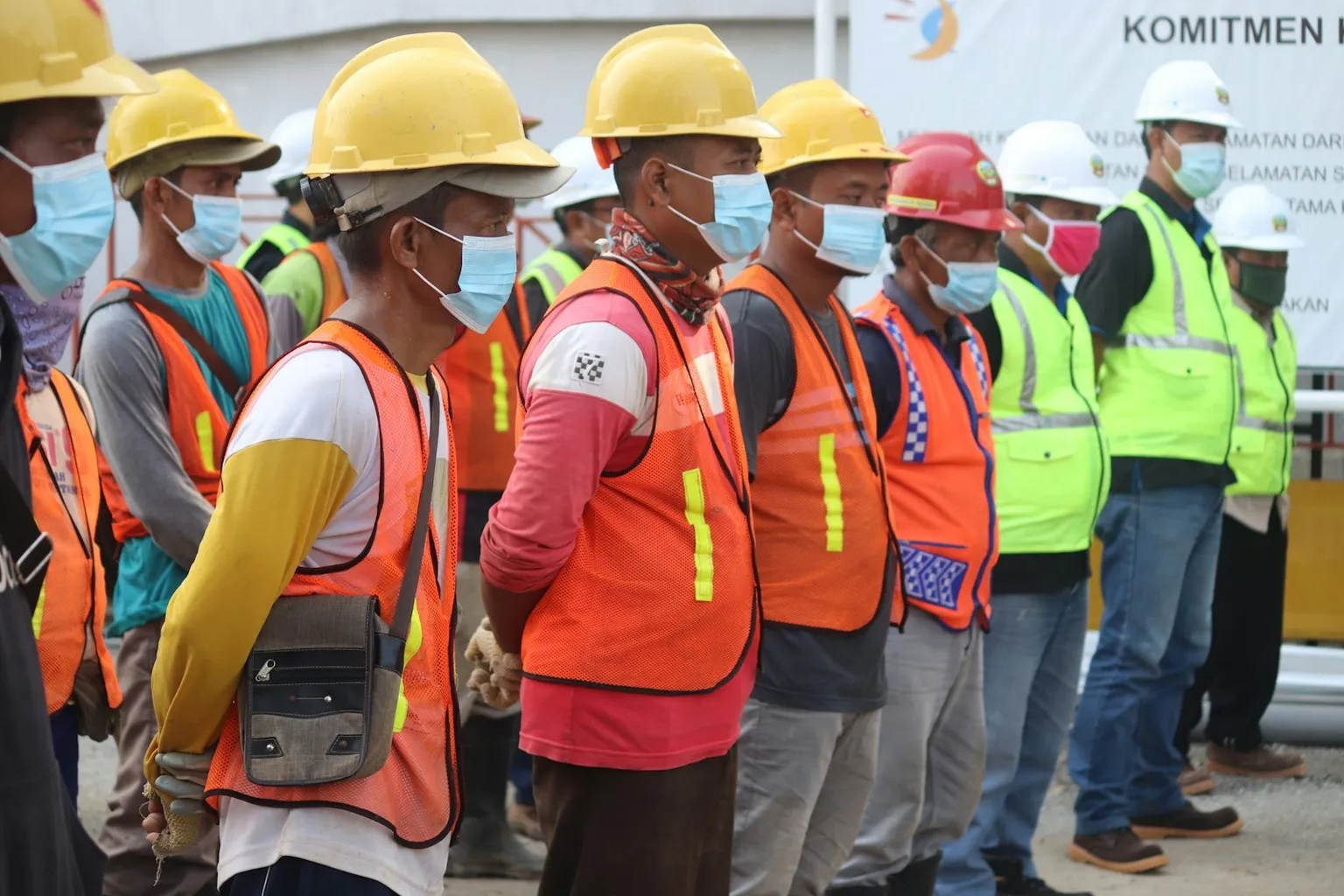
People search for how to check an absconding case in Qatar because they are afraid of one, or because an employer has said they will file one. This guide follows the Arabic text of Law No. 21 of 2015 on the entry, exit and residence of expatriates, as shown on Al Meezan, Qatar's official legal portal. It explains what the law says, not how a particular case ends, and it is not legal advice.
What the law says about leaving work
Article 16 says an expatriate who is licensed to enter or stay for a particular purpose, or to work for a particular employer, must not go against that purpose, must not leave work with the person who brought them in, and must not work for an employer they are not licensed to work for. The same article says a person is not in breach if, with the authority's approval, they carry out some management work in a company where they are a partner with signing powers.
Article 19 puts a duty on the employer, called the sponsor in the law. The sponsor must report to the authority within 14 days from the date the worker leaves work for them, or refuses to leave Qatar after their residence permit was cancelled or ran out and the time allowed in Article 8 has passed.

Who pays if a worker is sent home
Article 19 also deals with the cost of deportation. If it is proved that the worker was working for another entity against the law, that entity pays. If that entity cannot be identified, the worker pays. If the worker cannot pay and has no money in Qatar, the sponsor pays. Anyone who employs a worker they did not bring in, against the law, must pay the cost of sending that worker home.
What the penalty is
| Article | What it covers | Penalty or rule |
|---|---|---|
| Article 16 | Leaving work with the sponsor or working for an unlicensed employer | Offence under Article 38 |
| Article 19(1) | Sponsor must report within 14 days | Duty on the employer |
| Article 38 | Breaking Article 16 | Up to 3 years in prison and a fine of up to QR 50,000, or either |
| Article 38, repeat within a year | Repeat offence | 30 days to 3 years and QR 20,000 to QR 100,000, or either |
| Article 41 | Fines under this law | Cannot be suspended |
These are maximums and ranges set in the law. We did not find how courts or the Ministry of Interior apply them in practice, and many cases are settled before reaching a judge.
Settlement before a final judgment
Articles 42 to 45 let the Minister of Interior, or a person he appoints, accept a settlement for the offences listed in a schedule attached to the law, before a final judgment. The accused pays the amount in the schedule by the date set, and the criminal case ends. If the accused refuses or does not pay, the case continues. We could not read the schedule, so we cannot give the amounts.
Article 44 says a person accused of one of these offences may not leave Qatar until they pay the settlement or the case ends, unless a guarantor promises to pay. It also says the Minister may cancel the residence permit and order deportation if the settlement is not paid, or if a court fines or jails the person and the fine is not paid. Article 45 lets the Minister, for the public interest or humanitarian reasons, cancel or reduce the settlement amount.
How to check whether a case has been filed
We did not find an official page that lets a worker look up an absconding report by number or by QID, and the Hukoomi portal was blocked to our tools. News coverage in Qatar says the Ministry of Interior's Search and Follow-up Department handles these reports and tries to settle them with both sides, and sends the case to court if that fails. This is reported by Gulf News and the Qatar Tribune, and we did not check it on a ministry page.
- Ask at a Ministry of Interior service centre, and take your QID, passport and any papers you have. The staff can tell you what your record shows.
- Check your residence permit status and any travel restriction through the Ministry's own channels, such as the Metrash app, if it shows these for your record. We could not confirm what Metrash shows.
- Do not pay an agent or a stranger who promises to remove a case. Nobody outside the authority can remove a report, and these offers are a common scam.
If you left because your employer broke the law
Leaving work is not the same as being owed nothing. If your employer has not paid your wages, changed your job, or put you in danger, you have options that are separate from the offence in Article 16.
- Article 21 of Law No. 21 of 2015, as amended by a decree-law, says a worker may move to another employer under the rules and procedures set by the Ministry of Administrative Development, Labour and Social Affairs. The portal note reads 19/2002, which looks like a typo for Decree-Law 19 of 2020, the decree that the portal says repealed Article 22. See our guide to changing jobs without an NOC.
- You can file a complaint with the Ministry of Labour. Our labor complaint guide explains the steps, and our page on unpaid salary covers wages.
- Qatar Tribune has reported that the Ministry of Labour and the Ministry of Interior are working to stop false absconding reports, and that an employer cannot file one after the worker has complained to the Ministry or the courts. We could not confirm this on an official page, so treat it as reported, not as a rule you can rely on.
- Under Article 61 of the Labour Law, an employer may dismiss a worker without notice and without gratuity if the worker is absent without a legitimate reason for more than seven consecutive days or fifteen separate days in one year. This is a labour matter, separate from the report to the Ministry of Interior. See can my employer fire me in Qatar.
Mistakes to avoid
- Stopping work without giving notice. Our notice period guide explains what the law asks.
- Working for another employer without the transfer being approved.
- Ignoring a call or message from the Ministry of Interior.
- Planning to leave Qatar before you know whether a case exists. Article 44 can stop a person with an open case from leaving.
- Signing a settlement paper you do not understand.
What we could not verify
- How you can check a report online or by phone today. We found only news coverage, not an official service page.
- The settlement amounts in the schedule attached to Law No. 21 of 2015.
- Whether Article 16 or Article 38 were amended after the text we read, which decree-law amended Article 21 (the portal note says 19/2002), and how the 2020 changes work in practice.
- The Qatar Tribune report about false absconding reports and complaints, which we did not find on an official page.
- How the rules apply to domestic workers, free zone staff or public sector employees.
If you are in this situation, speak to the Ministry of Interior, the Ministry of Labour, or a licensed lawyer, and keep every paper and message.
Frequently asked questions
Is there an official way to check an absconding case in Qatar?
We did not find an official online page for it. The Ministry of Interior handles these reports, so ask at one of its service centres with your QID and passport. Do not pay anyone who offers to check or remove a case.
How long does an employer have to report that a worker left?
Article 19 of Law No. 21 of 2015 says the sponsor must report to the authority within 14 days from the date the worker leaves work for them.
What is the penalty for leaving work without the employer?
Article 38 sets imprisonment of up to three years and a fine of up to QR 50,000, or either one, for breaking Article 16. A repeat within a year raises the range. Article 41 says fines cannot be suspended.
Can the case be settled without going to court?
Articles 42 to 45 let the Minister of Interior accept a settlement for listed offences before a final judgment. The accused pays the scheduled amount and the criminal case ends. We could not read the schedule of amounts.
Sources & references

Agha Ali Abbas
Founder & Editor
More on Jobs
Explore everything you need to know about qatar jobs.
Related articles
How to Find a Job in Qatar: A Realistic Guide
Where roles actually get filled, what slows down the visa process, and how to avoid the mistakes that stall an offer.

In-Demand Jobs in Qatar: Sectors That Generally Hire Expats
The sectors that generally employ the most expats in Qatar, from healthcare and finance to tech and construction, with a note on how the 2026 gas disruption may affect energy hiring.
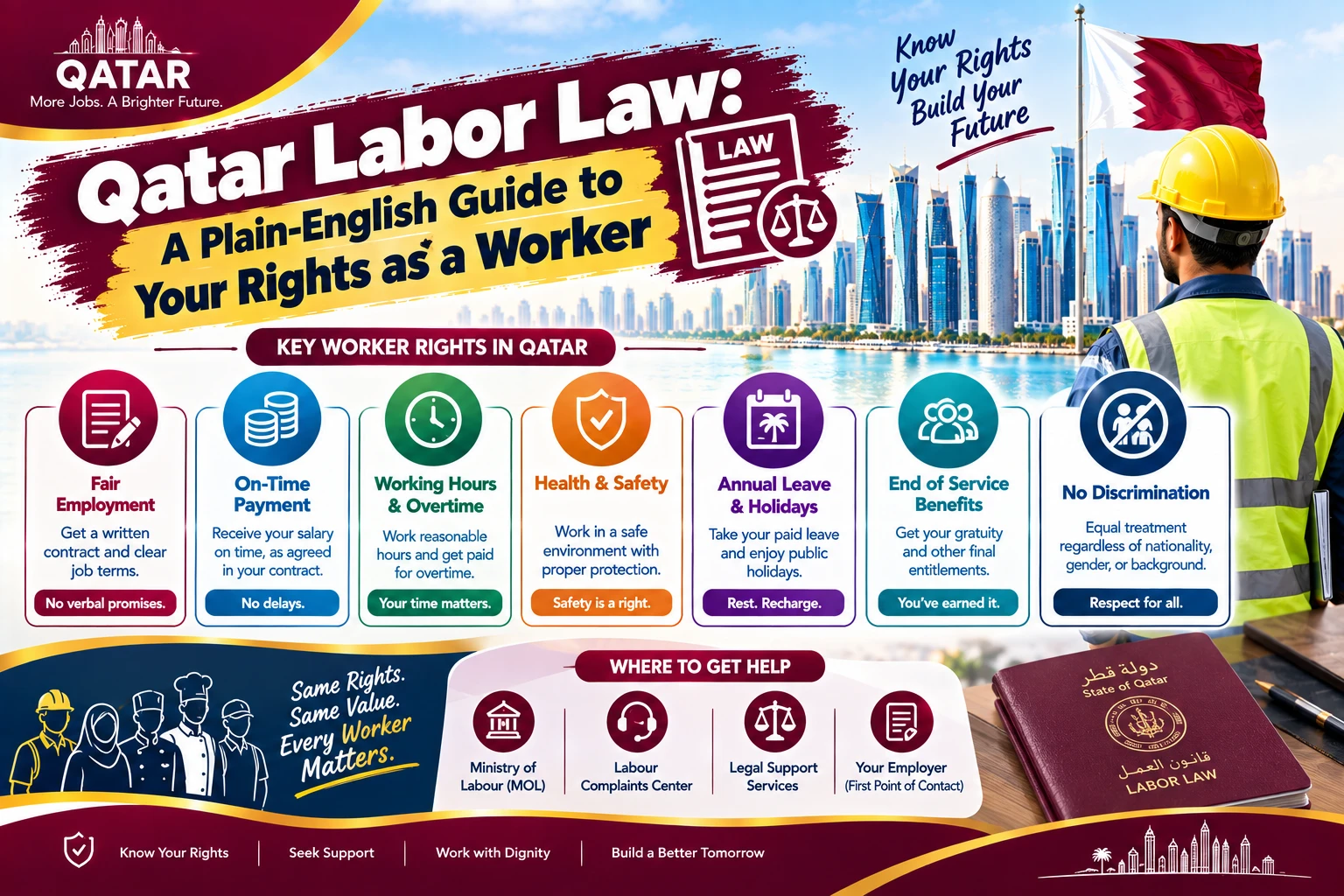
Qatar Labor Law: A Plain-English Guide to Your Rights as a Worker
What Qatar's labor law actually guarantees on hours, leave, overtime, and probation, explained without the legal jargon, plus where to go if your employer isn't following it.