
How to Find a Job in Qatar: A Realistic Guide
Where roles actually get filled, what slows down the visa process, and how to avoid the mistakes that stall an offer.
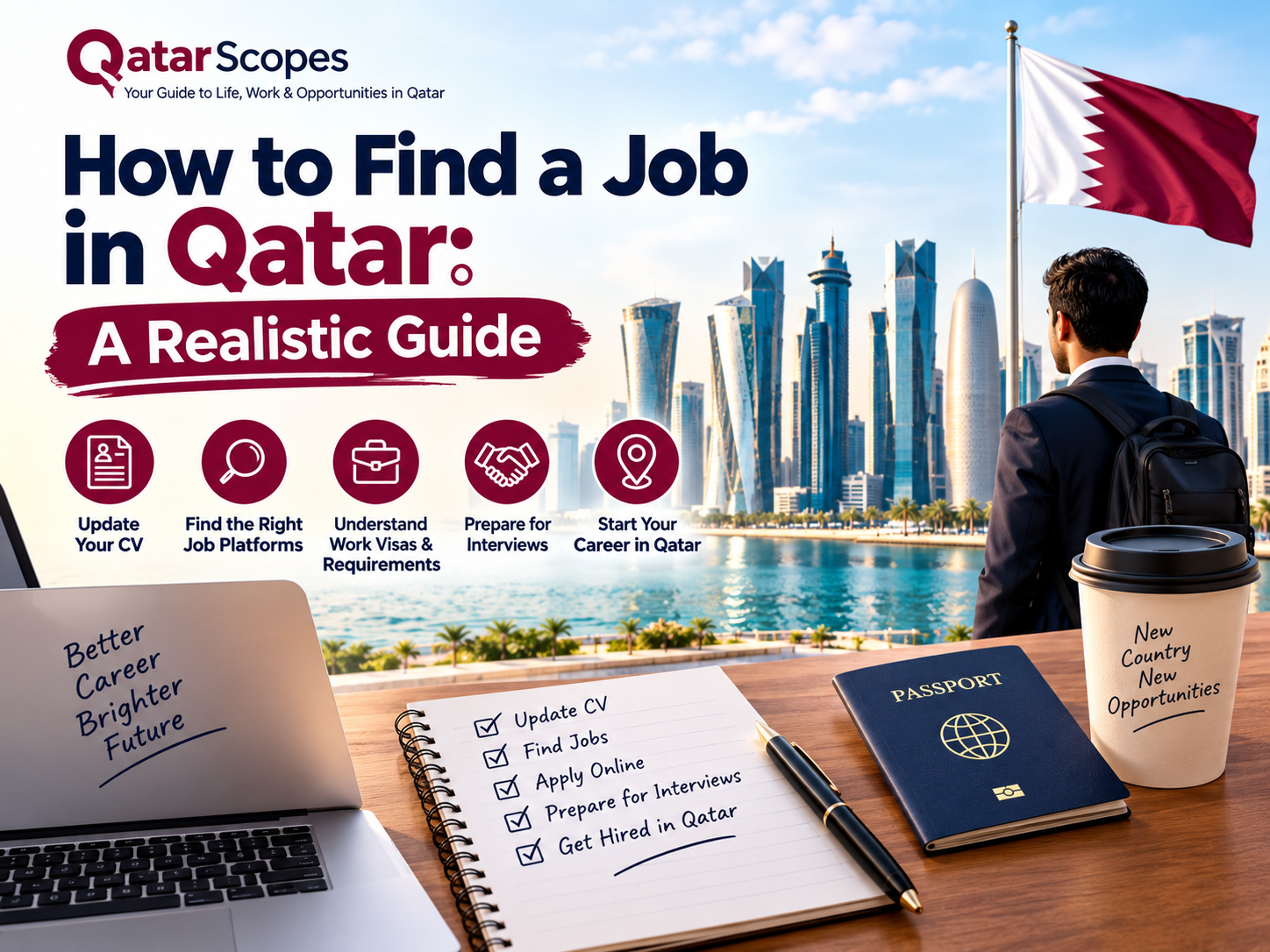
Finding a job in Qatar is mostly about reaching real employers and then handling the paperwork correctly. This guide was rewritten in September 2026. We removed statistics and timelines we could not source, and we based the process on Hukoomi and Ministry of Labour pages.
Where to look
Employers generally recruit through their own career pages, recruitment agencies, and professional networking sites, but we did not find an official statistic on which channel accounts for most hires, so treat any share you see quoted as unverified. Some public bodies take applications only through their own portals. Our guide to government jobs in Qatar for expats explains how the Ministry of Education, Hamad Medical Corporation, and the Ministry of Interior take applications. Kawader, the national employment platform, is described as being for Qatari citizens and children of Qatari mothers, so expats use the individual portals.
Check the employer, and avoid scams
This is our own practical advice.
- Never pay a fee for a job offer, an interview, or shortlisting. Hukoomi states that its government job application services charge no fees.
- Check the company exists and ask for a written offer that states the job title, salary, allowances, and contract length.
- Be suspicious of any job that asks you to travel on a tourist or visit visa to look for work. Official pages describe a work residence permit obtained through a Qatari employer, and we found no official page that supports working on a visit visa. Our guide to Qatar visa types explains the difference.
- Confirm the salary meets the legal floor. See our guide to the Qatar minimum wage.
How sponsorship works
Hukoomi's Residence and Work Permits article, dated April 2023, says everyone who wants to work and live in Qatar needs a Work Residence Permit, which requires a Qatari employer, an individual or a company. It says the employer usually handles all the paperwork, arranges a temporary visa when you first enter, and converts it into a work residence permit, a process that typically takes 2 to 4 weeks and sometimes longer, during which you may not leave the country. Once you have the permit, you can access many other services, such as signing a rental agreement.
The article dates from 2023, so ask your employer's PRO about the current process. We did not find official information on an employer needing an approved quota, so we do not claim one.
Documents to prepare
Employers commonly ask for attested certificates and a clean criminal record certificate. The exact list depends on your role and nationality, so ask the employer. Our guide to a police clearance certificate explains how residents and former residents apply for one, and our family visa guide explains attestation, which many document processes require. Some professions, such as healthcare and finance, need local licensing. See our guide to industries hiring in Qatar.
After you sign
- Read your contract before you sign, including the notice period, probation, and pay terms. See our Qatar labor law guide for what the law says about hours, leave, and probation.
- Once the contract is authenticated, check what your employer registered. See how to check your employment contract online.
- If you change employers later, the government said in 2020 that the No-Objection Certificate requirement for changing jobs was removed. Our guide to changing jobs without an NOC explains what still applies, such as notice.
- For your first steps after arriving, see our first week in Qatar checklist.
Common mistakes
- Paying an agent or website for a job that is free to apply for.
- Traveling on a visit visa to look for work.
- Signing without reading the notice period and pay terms.
- Not checking the registered contract after it is authenticated.
- Leaving the country during the visa-to-permit conversion.
What we could not verify
- How many hires happen through agencies, career pages, or networks.
- The current offer-to-permit timeline beyond Hukoomi's 2 to 4 weeks for conversion.
- Whether an employer needs an approved workforce quota to sponsor you.
- Whether a visit visa can be converted to a work permit inside Qatar.
Frequently asked questions
How do I find a job in Qatar as an expat?
Apply through employers' career pages, agencies, and official portals such as those for the Ministry of Education, HMC, and the Ministry of Interior. Never pay for a job offer.
Who sponsors my visa in Qatar?
A Qatari employer, individual or company. Hukoomi says the employer usually handles the paperwork and converts your temporary visa to a work residence permit.
How long does it take to get a work permit in Qatar?
Hukoomi says converting the temporary visa to a work residence permit typically takes 2 to 4 weeks, sometimes longer, and you may not leave the country meanwhile. The date of that article is 2023.
Can I look for a job in Qatar on a tourist visa?
We found no official page that supports working on a visit visa. Official pages describe a work residence permit through an employer. Confirm with a PRO before you travel.
Can I switch employers in Qatar?
The government said in 2020 that the No-Objection Certificate requirement for changing jobs was removed. Notice periods and contract terms still matter, so read your contract.
Sources & references

Agha Ali Abbas
Founder & Editor
More on Jobs
Explore everything you need to know about qatar jobs.
Related articles

In-Demand Jobs in Qatar: Sectors That Generally Hire Expats
The sectors that generally employ the most expats in Qatar, from healthcare and finance to tech and construction, with a note on how the 2026 gas disruption may affect energy hiring.
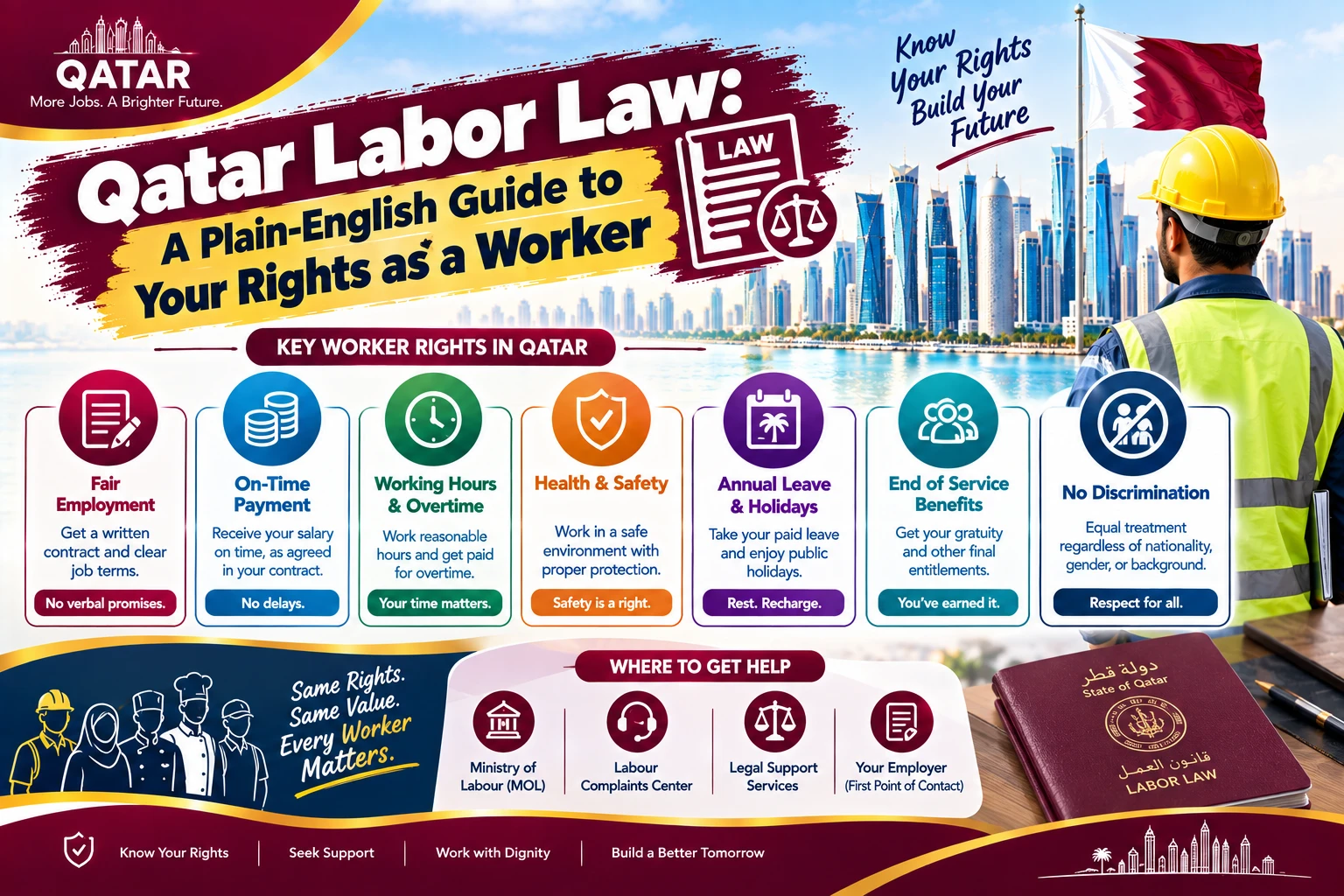
Qatar Labor Law: A Plain-English Guide to Your Rights as a Worker
What Qatar's labor law actually guarantees on hours, leave, overtime, and probation, explained without the legal jargon, plus where to go if your employer isn't following it.
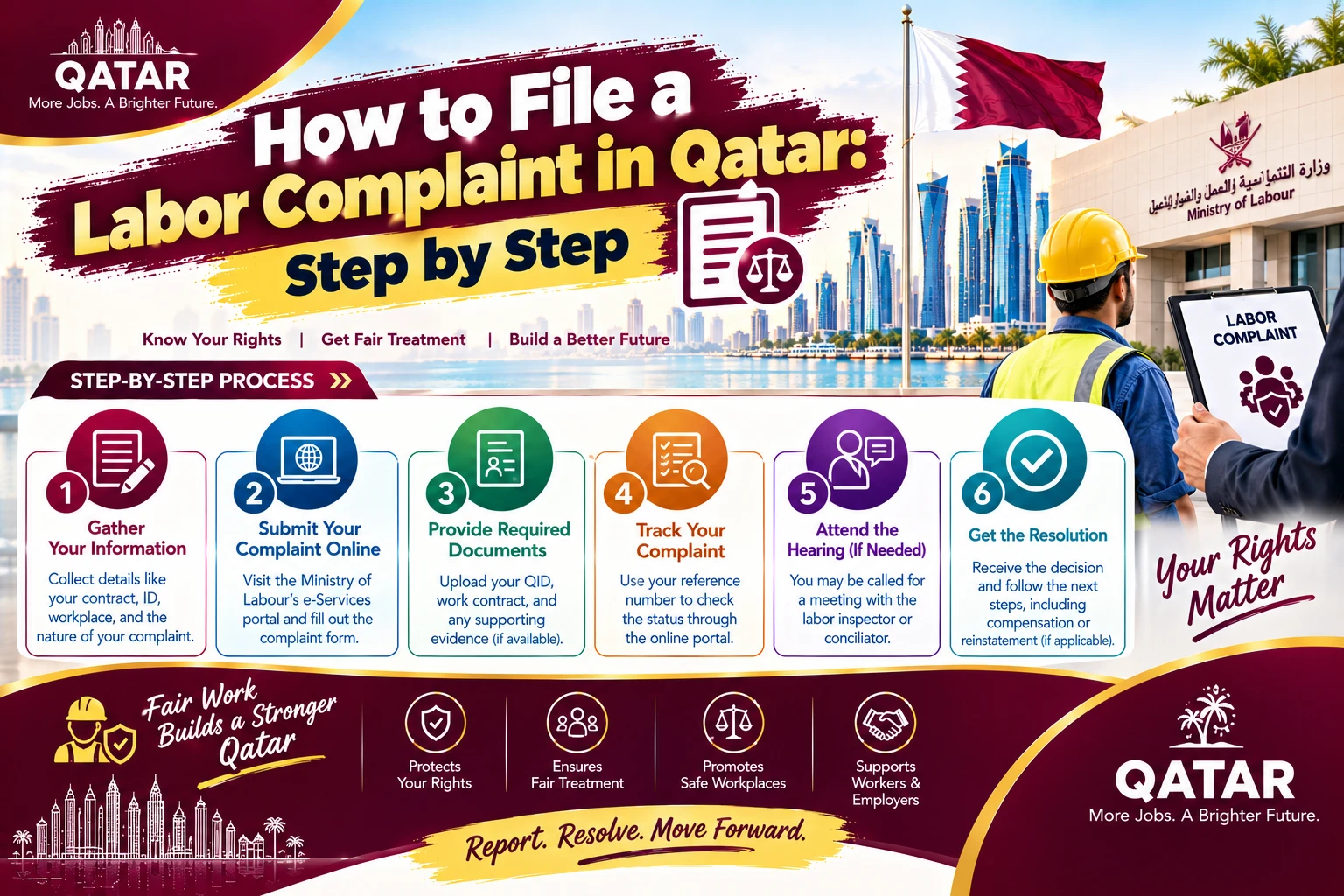
How to File a Labor Complaint in Qatar: Step by Step
Exactly how to report unpaid wages, contract violations, or unsafe conditions to Qatar's Ministry of Labour, and what happens after you file.