
Best IT Skills to Learn for Jobs in Qatar in 2026
The IT skills Qatar employers ask for in 2026, from cloud and cybersecurity to data and AI, and how to prove each one with certifications and projects.
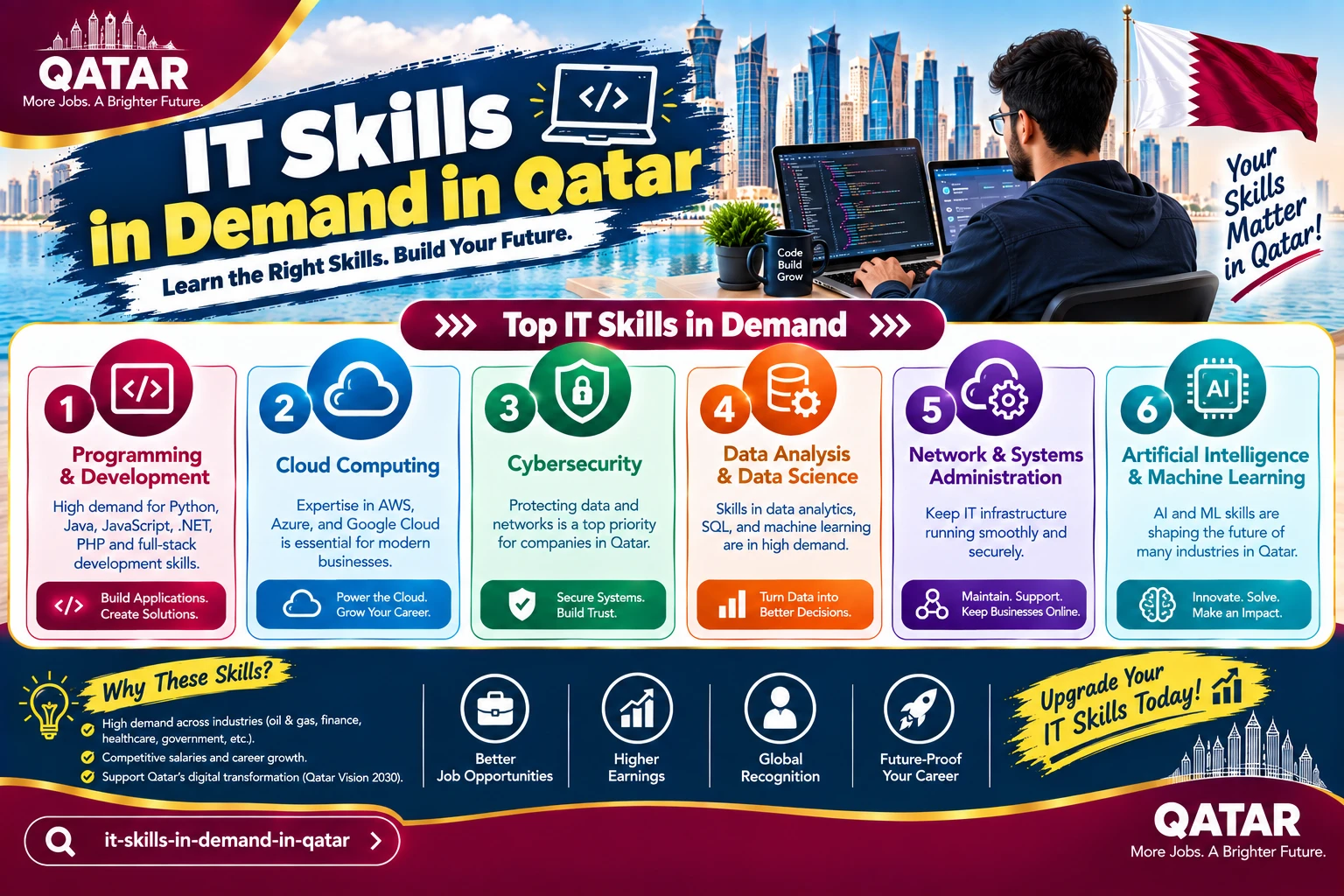
This guide is about skills, not job titles. If you want to know which roles are in demand, read our guide to the most in-demand IT jobs in Qatar. Here we cover what to learn, why it matters in Qatar, and how to show employers that you have it. We link our sources and mark our own opinions.
Why skills matter in Qatar right now
Qatar wants a much bigger digital workforce. An MCIT official said in October 2025 that the Scale Now program aims to have 10 percent of the workforce with advanced ICT skills by 2030. The Digital Agenda 2030 names areas such as cybersecurity, artificial intelligence, and the Internet of Things as areas of transformation, per Gulf Times.
Employers say they cannot always find these skills. The Hays GCC Salary Guide 2026, a survey of more than 1,600 employers and professionals across the GCC, found that 90 percent of organizations reported skills gaps in 2025. It is a regional survey, not a Qatar-only one, but it points the same way as the local plans.
How to read this list
We looked at the wording of listings visible on Glassdoor and Bayt in 2026 and matched them against Qatar's national plans. This is a set of examples, not a statistical count of every listing. Tools and exams also change, so always check the current listing and the vendor's current certification list before you invest months of study.
Cloud computing
Cloud is one of the clearest skill areas because the infrastructure is now local. Microsoft opened its first Qatar cloud region in August 2022, and Google Cloud launched a Doha region in May 2023. Cloud engineer listings we saw asked for Azure and Google Cloud experience, and some asked for AWS.
Start with one platform, then learn the basics of the others. Common entry certifications include AWS Certified Cloud Practitioner, Microsoft Azure Fundamentals (AZ-900), and the Google Cloud Associate Cloud Engineer. Move to associate-level certifications once you have hands-on practice. Our guide to cloud computing jobs in Qatar shows how these skills map to roles.
DevOps and automation
Senior cloud and DevOps listings we saw asked for five or more years with containers and pipelines, naming Kubernetes, Docker, Red Hat OpenShift, and CI/CD tools. Learn Linux basics, Git, Docker, and one CI/CD tool first. Then add Kubernetes and infrastructure as code. The Certified Kubernetes Administrator is a widely recognized hands-on exam, and a personal project that deploys an app through an automated pipeline is a strong portfolio piece.
Cybersecurity
Qatar's National Cyber Security Strategy 2024-2030 includes a pillar on building a qualified cybersecurity workforce. Qatar's 2022 cybersecurity framework incorporates the U.S. NIST 800 series, according to a U.S. Commerce Department report, so learning the NIST frameworks is worthwhile. Listings we saw included security analyst, industrial control systems security, and governance, risk, and compliance (GRC) roles.
Good starting points are networking and operating system basics, then security fundamentals. Common certifications include CompTIA Security+ and the ISC2 certifications, from the entry-level Certified in Cybersecurity to CISSP for experienced professionals. OT and industrial control system security is a niche worth noting, since some listings asked for it in energy-related settings. For roles and career paths, see our guide to cybersecurity jobs in Qatar.
Data and analytics
Data listings we saw asked for SQL database design, MySQL, PostgreSQL, and MongoDB, plus cloud data platforms, with one preferring Azure, and knowledge of data governance. Learn SQL first, since it is useful in almost every data role. Then learn Python and a reporting tool such as Power BI. Microsoft offers a Power BI Data Analyst certification (PL-300) on its credentials page. Build two or three projects with real, public data and explain your findings in plain language. Our guide to data science jobs in Qatar shows how to use Qatar's open data portal for this.
AI and machine learning
Qatar has invested in AI at the national level. The Qatar Computing Research Institute developed Fanar, an Arabic language model, and the Qatar Investment Authority launched the national AI company Qai in December 2025, as reported by The Peninsula. A 2025 U.S. Commerce Department report also says MCIT announced a National Centre for Artificial Intelligence.
The core skills are Python, statistics, and machine learning libraries, then how to deploy models. Skills in Arabic language processing are a Qatar-specific edge, given the Fanar work, though we found no data on how many listings ask for it. Many AI listings are senior or research-focused, so build a portfolio with projects you can explain and show. A degree or advanced study helps for research roles. See our guide to AI jobs in Qatar for the roles and employers.
Software development
Developer roles are among the most common. Rather than guess at a list of languages, read five listings for your target role and learn the languages and frameworks that repeat. Whatever the stack, in our view the durable basics are version control with Git, testing, working with APIs, and writing clear code. Add cloud basics to stand out, since many developer jobs now involve deployment. Our guide to software developer jobs in Qatar covers the roles and career path.
Networking and infrastructure
Network engineer listings we saw ranged from installing and maintaining network equipment and servers to designing secure cloud and hybrid networks. Learn how networks work, then get hands-on with routers, switches, and firewalls. Common certifications include CompTIA Network+ and the Cisco CCNA. Cloud networking is a useful next step.
ERP and business systems
Glassdoor showed 206 ERP listings and 156 SAP listings in Qatar in February 2026. If you have finance, supply chain, or HR knowledge, learning an ERP system such as SAP can turn that knowledge into a technical career. Vendor training and certifications are the usual route.
Skills by type of employer
The right skills also depend on who you want to work for. These examples come from listings and the top-employer lists shown on Glassdoor's Qatar pages in 2026. They are not a full survey.
- Energy: QatarEnergy appeared among employers for cloud administration on Azure and Google Cloud, and for operational technology security and business analysis roles.
- Aviation: Qatar Airways appeared among employers for cloud, DevOps, business analyst, and IT service management roles.
- Banking: QNB appeared among employers for AI, machine learning, and database roles, as well as IT management.
- Universities and research: Qatar University appeared among employers for machine learning, and the Qatar Computing Research Institute lists research scientist and software engineering positions.
For the wider picture of which sectors are hiring, see our guide to industries hiring in Qatar. If a skill matters to a specific employer, the fastest check is to read that employer's current listings on its official careers page.
Skills that are not technical
Some industry summaries list communication and data literacy among the most consistently requested capabilities in the Gulf. We could not trace this to a primary survey, so treat it as general guidance, not a measured finding. Qatar's workplaces bring together people from many countries, so clear, simple English helps. Practice explaining technical work to someone who is not technical.
Which skill should you learn first?
This is our analysis, not a sourced finding.
- New to IT: learn computer and network basics, then IT support skills, and earn CompTIA A+ or an equivalent.
- Already in IT: pick one cloud platform and earn its associate certification.
- Developer: add cloud and DevOps skills next.
- Analyst or finance background: learn SQL, then Power BI, then Python.
- Interested in security: learn networking first, then Security+.
How to prove your skills
Employers trust evidence. A certification shows you passed a standard exam. A project shows you can build something. Experience shows you can do it at work. Use all three when you can. Put certifications and projects near the top of your CV, and describe what you built, what tools you used, and what result it produced. For the full application process, see our guide to getting an IT job in Qatar.
A good project write-up has four parts: the problem, what you built, the tools you used, and the result. For example: "Built a pipeline that loads public transport data into a database and shows monthly trends in Power BI." Put the write-up on GitHub or a simple web page, and link it from your CV and LinkedIn profile. A reviewer can then check your work in two minutes, which is more convincing than a list of skills. If you are changing careers, two or three small, finished projects are worth more than one large project that is never completed.
Real problems people run into
- I do not know where to start. Choose one role from our in-demand roles guide, read five listings, and learn what repeats.
- I collect certifications but get no interviews. Add projects and experience. Certifications alone rarely carry an application.
- Listings ask for years of experience I do not have. Look for junior and support roles first, and build a portfolio while you work. Our guide to IT jobs in Qatar for freshers covers the entry-level route.
- My exam was retired or replaced. Vendors change exams often. Check the vendor's current list before you enroll.
- I am not sure my degree will be accepted. Check the attestation rules early. Our guide on getting an IT job in Qatar explains the steps.
Next steps
Pick one skill area, set a 90-day learning plan with one certification and one project, and check the listings again at the end. Skills that match repeated listing requirements are the ones most likely to lead to interviews.
Frequently asked questions
What IT skills are in demand in Qatar?
Listings and national plans point to cloud platforms, cybersecurity, data engineering with SQL and Python, AI and machine learning, DevOps tools, networking, and ERP systems. Communication skills also come up often.
Which IT certification is best for Qatar?
It depends on your target role. Common choices are AWS, Azure, or Google Cloud certifications for cloud, CompTIA Security+ for security, and CompTIA A+ for entry-level support. Check current exam lists, because vendors retire exams.
Is cloud computing in demand in Qatar?
Yes. Microsoft opened a Qatar cloud region in 2022 and Google Cloud opened a Doha region in 2023, and listings we saw asked for Azure, Google Cloud, and AWS skills.
Do I need to speak Arabic to work in IT in Qatar?
We found no source saying Arabic is required for IT jobs in general. Arabic language processing is a niche advantage in AI, given the Fanar language model. Check each listing for its language requirements.
Can I learn IT skills without a degree?
You can learn the skills, and certifications and projects help. But many listings ask for a degree or diploma, and a work visa process requires attested education documents, so check the employer's requirements.
How long does it take to learn a job-ready IT skill?
It depends on your background and the skill, and we found no reliable figure for Qatar. Plan around a defined goal, such as one certification and one project, and adjust based on your progress.
Sources & references
- The Peninsula, MCIT initiative aims to double ICT jobs by 2030 (Oct 17, 2025)
- Gulf Times, MCIT Digital Agenda 2030 (Feb 27, 2024)
- Hays GCC Salary Guide 2026 press release (via Zawya)
- U.S. Commerce Department, Qatar AI and technology developments (Jul 2, 2026)
- U.S. Commerce Department, Qatar cybersecurity sector (Sep 26, 2022)
- National Cyber Security Strategy 2024-2030, Government Communications Office
- Microsoft, first datacenter region in Qatar (Aug 31, 2022)

Agha Ali Abbas
Founder & Editor
More on Jobs
Explore everything you need to know about qatar jobs.
Related articles
How to Find a Job in Qatar: A Realistic Guide
Where roles actually get filled, what slows down the visa process, and how to avoid the mistakes that stall an offer.
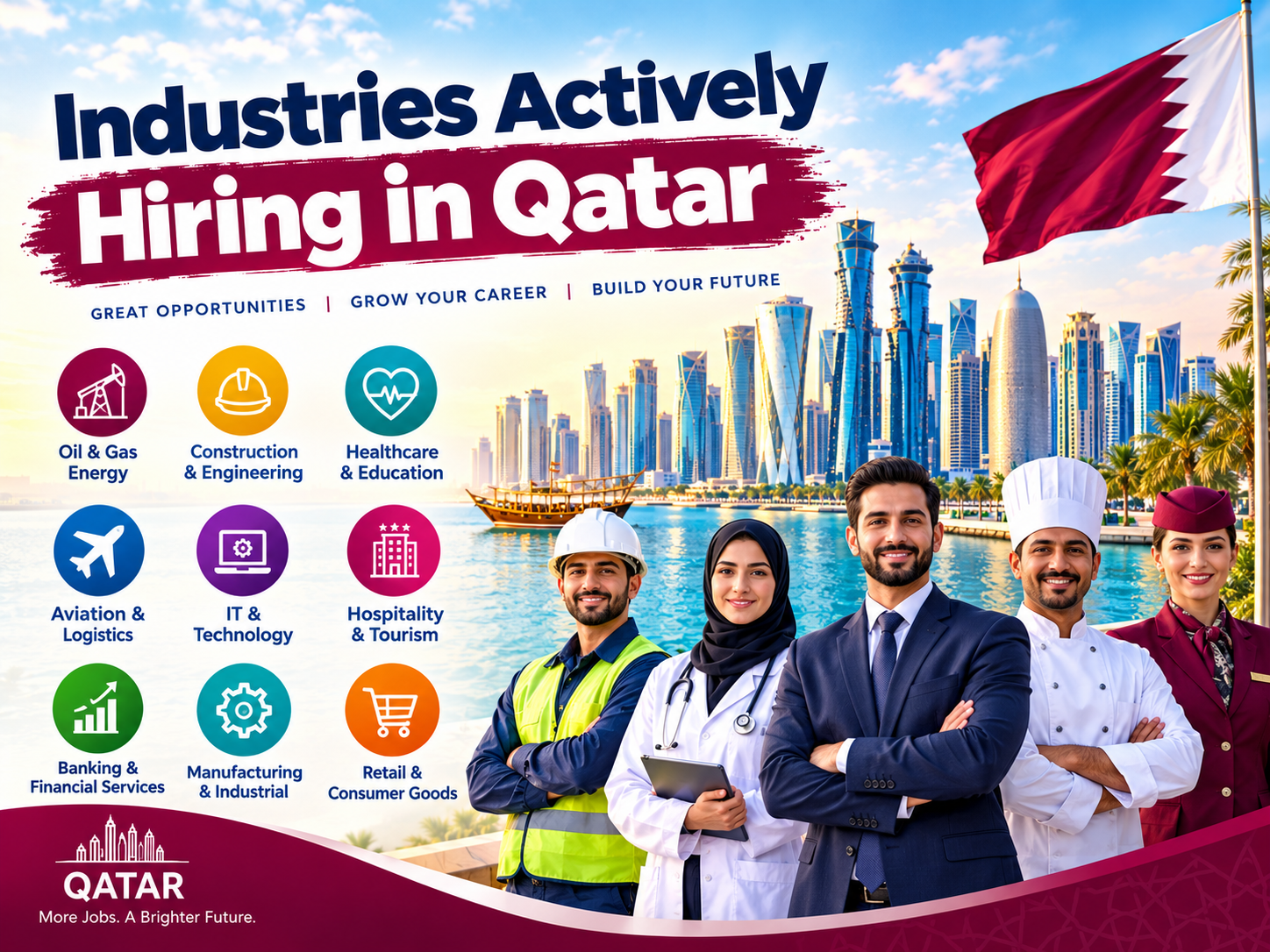
In-Demand Jobs in Qatar: Sectors That Generally Hire Expats
The sectors that generally employ the most expats in Qatar, from healthcare and finance to tech and construction, with a note on how the 2026 gas disruption may affect energy hiring.
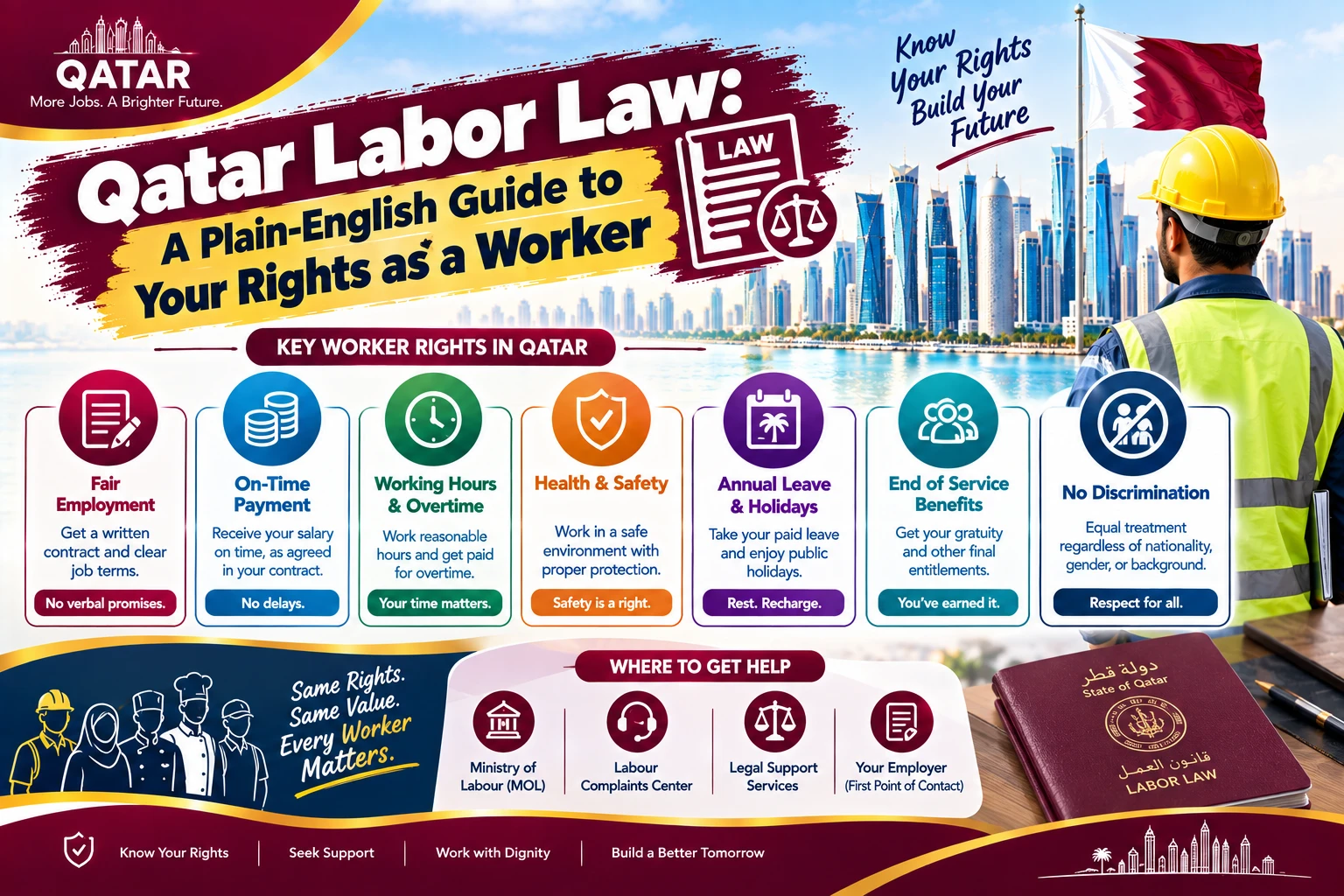
Qatar Labor Law: A Plain-English Guide to Your Rights as a Worker
What Qatar's labor law actually guarantees on hours, leave, overtime, and probation, explained without the legal jargon, plus where to go if your employer isn't following it.